Monday, December 7, 2015

Three Plans For Tesla Museums Emerge

Three plans for Tesla museums emerge

Edison’s rival to be honored at buildings in Falls, Buffalo, Long Island

Edison’s rival to be honored at buildings in Falls, Buffalo, Long Island


Paul Tsouflidis, right, and Bill Zimmerman plan to restore the “Terminal A” building on Niagara Street into a museum, brewery and restaurant honoring Nikola Tesla. 

   Mark Mulville/Buffalo News
Paul Tsouflidis, right, and Bill Zimmerman plan to restore the “Terminal A” building on Niagara Street into a museum, brewery and restaurant honoring Nikola Tesla. Mark Mulville/Buffalo News 


Decades after Nikola Tesla figured out how to use the energy of Niagara Falls to send electricity far enough and strong enough to run the trolleys and lights in Buffalo and, eventually, power everything in the Northeast, there are three museums sparking up in his honor – two of them local.
Entrepreneurs in Buffalo intend to start construction in the spring on “Tesla City,” a restaurant and brewery complete with exhibits hanging from the ceiling in what was once a Niagara Street way station where Tesla’s electricity first arrived from the Falls in 1896.

An artist’s rendering of “Tesla City,” a proposed museum, brewery and restaurant at the “Terminal A” building, the first place in Buffalo to receive the power sent from the Edward Adams Plant in Niagara Falls and send out electricity to run trolleys and turn on lights in the city.
Another group struggling in Niagara Falls formed a “Tesla at Niagara” nonprofit in hopes of installing a museum tribute in the last building that remains from the original Adams power station that could power lights 400 miles away.
A third group, downstate, plans a “physics playground,” environmental center, maker space and exhibit about Tesla’s life at the former lab where he built a domed 187-foot tower for what he wanted to be a global, wireless communication system.
“Maybe two museums in Buffalo are too much, but … Tesla’s long overdue,” said Jane Alcorn, president of the Tesla Science Center at Wardenclyffe, developing in Shoreham, Long Island.
Nikola Tesla.

The system that Tesla launched here with hydropower is the same one electrifying the planet now.
“Here’s a man who contributed mightily to the world, to the society, in the large sense,” Alcorn said. “His electrical system is used worldwide. Here in America, his name was not exalted in the way that Edison’s had been.”


For years, the only local tribute to Tesla was the statue of the inventor reading, on Goat Island in Niagara Falls State Park.
Then Elon Musk, SolarCity and Space X founder, named his new electric car, “Tesla.” That fueled curiosity about the tall, thin genius inventor and star of the Gilded Age, who hung out with Mark Twain, pioneered the radio, X-rays, radar, lasers, robots and fluorescent lights and died alone and broke in his New York City hotel room in 1943.
“I’m kind of amazed at how popular he’s become,” said Marc Seifer, author of “Wizard: The Life and Times of Nikola Tesla.” “After Tesla, you have a renewable source of clean energy ... Nikola Tesla is the single most important person for helping to slow down global warming.”
At midnight Nov. 16, 1896, a switch was flipped, and for the first time, electricity from the Falls powered lights, trolleys and machines in Buffalo. It was Tesla’s defining victory over Thomas Edison in their feud over how to transmit electricity – direct current versus alternating current.
Tesla was a Serbian immigrant and electrical engineer who moved here in the 1880s. He worked for Edison until he quit in frustration.
At the time, Edison was famous for perfecting the light bulb. His electric company – eventually General Electric – invested in special converter machines called commutators that forced electricity to travel one way, a form known as direct current, or DC.
As a university student in Europe, Tesla worked out a way to use electricity in its natural state, as back-and-forth alternating current, or AC. He moved to the United States to refine and implement his idea for using a rotating magnetic field in an induction motor to send AC electricity farther and stronger than DC.
Tesla’s system made Edison’s DC, its commutators and the 3,000 coal-powered plants that powered them obsolete, said Seifer.
Edison campaigned against Tesla’s concept. He electrocuted cats, dogs, a horse and even an elephant to prove AC was dangerous.
“Edison closed his mind,” Seifer said.
Tesla fought back. He toured the East Coast, sending hundreds of thousands of volts through his own body for stage audiences.
“Thousands of people went to go see him,” Seifer said.
George Westinghouse bought his patents and backed him. Together they won the bid to set up AC hydropower at Niagara Falls.
“Once Tesla’s system was put in,” said Seifer, “all 3,000 power plants were taken down.”
Tesla kept inventing. He spent the rest of his life pioneering precursors to cell phones and computers and other fundamental features of modern life.
But unlike Edison, he slipped into obscurity.
“Tesla did not leave a business behind,” said Alcorn. “He did not leave a wife and family. By the time he died, most of his friends were gone.”

Buffalo museum

In Buffalo, the plain red brick building with boarded windows at 2280 Niagara St., known as “Terminal A,” was the first place in the city to receive Niagara Falls’ electricity.
“It was almost under the radar. It was very unadorned and meant to be disguised as, ‘Nothing to see here,’ ” said Bill Zimmerman, owner of Seven Seas Sailing School on his plan for “Tesla City.” “It was hiding the very magic that allowed energy to travel.”
About six months ago, he and Paul Tsouflidis, Acropolis restaurateur, connected on Facebook and met to talk business. Tsouflidis was captivated.
“I was fascinated by this Tesla guy,” said Tsouflidis, the son of an electrician. “I didn’t know he was the inventor of the transportation of electricity.”
At the time, Zimmerman was part owner of 2280 with a friend whose family once used it as a factory for fire extinguishers. As a student of local history and author of articles, he knew it was a first stop on the new, circa-1896 electric grid for “bulk power” from the Falls.
He thought a restaurant and brewery would be a self-sustaining way to tell the story and fund a museum, where Zimmerman imagines serving “Edison Bitter Ale.”
Last week, he and Tsouflidis closed on the building. They expect to start construction this spring. Plans include a glass addition, a rooftop terrace and a scaled-down replica of Tesla’s Wardenclyffe tower. Inside, they envision a catwalk for people to stroll along the 200-foot building span. Tesla-related displays will hang from the ceiling where there are still original wheels on a track that was a crane for electrical equipment.
“As soon as someone walks in,” Tsouflidis said, “I want them to start learning about Tesla.”
To coordinate news and happenings with Tesla societies and Tesla museums, Zimmerman started a Facebook page called “Nikola Tesla Collaborative,” which he intends to turn it into a nonprofit.
“I’m friends with the people in Niagara Falls,” said Zimmerman, who is working on a book. “We really hope they succeed in everything they intend to do.”

Niagara Falls

The Tesla museum journey is off to a slower start in Niagara Falls.
A team of power history buffs has been working on “Tesla at Niagara” for the last couple of years. They want to renovate the Adams Transformer House at 1501 Buffalo Ave. and set up a museum inside the last building left where Tesla’s power system began.
They don’t have a lot of museum details.
First, they need a building.
Peter Fontanarosa, the owner, seemed enthusiastic about their plan to buy or rent and restore and develop a museum. The owner of a construction company, he bought the building for $65,000 in 1997 after he heard Niagara Mohawk was selling.
About two months ago, the museum group offered an undisclosed amount.
They haven’t heard from him since.
“It’s very, very frustrating for us because we’re on hold and time is slipping away,” said Terry Lasher Winslow, vice president of “Tesla at Niagara,” former Niagara County Historian and leader of an industrial history museum in Troy. “It will diminish the whole project considerably if we’re not in the original building. So we’re opting to wait.”
Thinking Fontanarosa was ready to make a deal, they were too. They have a web site,www.teslaniagara.org, 501c3 status and a $500,000 Indiegogo campaign, which is now stalled at $210.
The Transformer House that once sent volts of electricity to Buffalo is still a glimpse of what was an electrical wonder of the world.
It stood in the shadow of two taller, “Power House” stations, designed by Stanford White and demolished in 1961.
Tesla compared them to the pyramids, cathedrals and Greek temples.
Like its grand cousins, the Transformer House is made from limestone blocks carved by Italian masons. The late afternoon sun looks golden when it pours in from the arched windows that stretch from floor to ceiling.
Fontanarosa says he gets the same sense of wonder and beauty he got from the Pantheon and other beautiful old things in the country where his family is from.
“It’s as exciting as what I saw in Italy,” he said.
Fontanarosa, the son and grandson of bricklayers, leaves the big wooden door open when he comes to putter, store equipment, move in cars like Jaguars and Cadillacs he lets park for the winter.
But he is coy about how much he wants for the building.
When his smart phone rang and the number of the museum organizer popped up, he didn’t answer.
“I’m not a good negotiator,” he said.
He’s heard about that Elon Musk gave $1 million to the Long Island museum. He doesn’t want to give up his building for too little.
”I’m not selling for a meager dollar,” he said. “I’m sorry.”

Tesla in Long Island

In 1901, Tesla moved his work to a lab on Long Island. His backer was J.P. Morgan, who helped pay for a long-gone 187-foot tower intended for transmitting wireless transatlantic messages.
By 1915, Tesla was out of cash. Friend and benefactor John Jacob Astor died in the Titanic. Tesla was stuck with a $20,000 bill for living at the Waldorf Astoria.
To pay, he signed the property over. Until the 1980s, a company produced photo emulsions there.
Jane Alcorn, a now retired librarian who ran a classroom science museum on a local high school, learned from a neighbor and Tesla fan about the old lab.
For almost two decades, the Long Island group worked with limited success to raise $850,000 to buy the property.
The plan is to build the Tesla Science Center at Wardenclyffe like a campus with a Tesla museum in the lab. The surrounding 16 acres will have features for visitors, students, teachers and entrepreneurs: from a physics playground, event hall, “maker studio” and environmental area to science and technology zones. An “innovation station” will give space to emerging technology companies.
The old lab still has to be gutted and outfitted with new windows, plumbing and heat.
“We’re going to need millions,” Alcorn said. “It’s going to be a couple of years at least to get the building in order.”
They got a big financial boost in 2012 from Matthew Inman, who draws millions to his irreverent online comic “The Oatmeal.”
Inman discovered Alcorn’s project after he published the story of the Edison-Tesla feud.
In a post at theoatmeal.com/comics/tesla titled, “Why Nikola Tesla was the greatest geek who ever lived,” he wrote, “Tesla was known for discovering amazing things and then forgetting to write them down. Edison was known for rushing to the patent office as soon as one of his employees had something.”
At the end, he decided to tack on a plea for donations. About 33,000 people from 108 countries pledged $1.4 million.
“That was the first time Indiegogo had gone that high,” Alcorn said.
Inman went to Twitter last year and asked Elon Musk for help, too. He got $1 million from Musk and a promise of a Tesla car charging station for the grounds.
“It was a fortuitous alignment of circumstance,” Alcorn said.
Niagara Falls may not have the same luck.
“I don’t think that every single place that Tesla lived or worked is going to get an Elon Musk donation,” Alcorn said.
She thinks the quirky inventor’s new popularity could have something to do with the realities of the digital age he imagined long before it happened. People toil in obscurity for long hours alone at their computers. That’s the way Tesla worked in his lab as he thought about things like wireless communication devices that would fit in a “vest pocket.”
“There’s a self-identification with many people with the underdog,” Alcorn said. “Tesla has a way of kind of capturing you once you find out about him.”


---{-=@

HICKOK

A Trivia Quiz about the Japanese Attack on Pearl Harbor

A Trivia Quiz about the Japanese Attack on Pearl Harbor

In the early morning hours of December 7, 1941, Japan launched a surprise military attack on the United States naval base at Pearl Harbor in Hawaii. To mark the anniversary of that event, which led to this country's entry into World War II, try your luck with these trivia questions to find out how much you know about the attack, Japan's motives, and the events that followed.

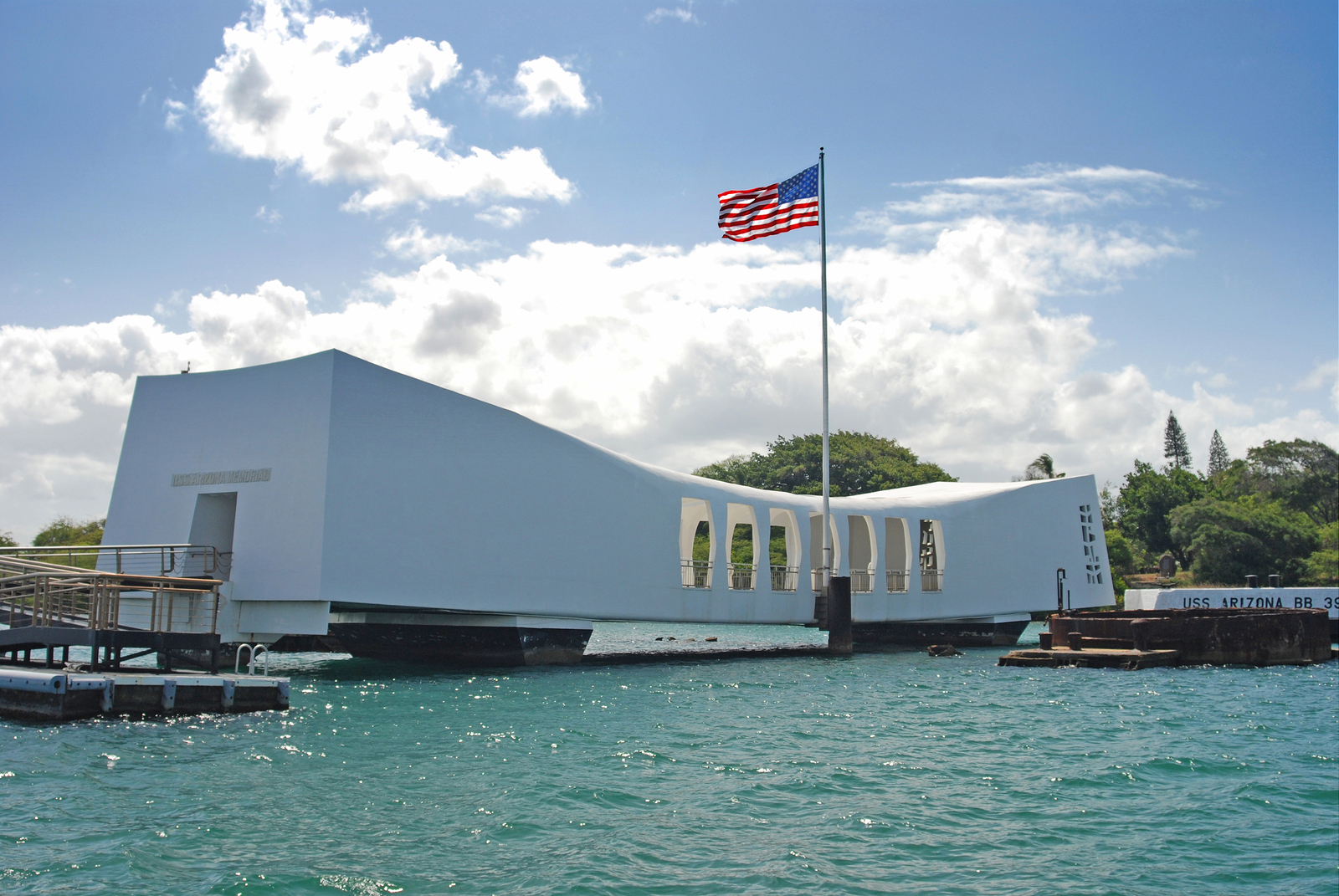
Why Did Japan Launch the Attack?#The USS Arizona Memorial marks the final resting place of more than 1,100 sailors and Marines killed on the battleship USS Arizona during the Japanese attack on Pearl Harbor.In pursuit of its expansionist policy, fueled in part by the country's lack of natural resources, Japan planned to invade Malaya and the Dutch East Indies to take advantage of those territories' rich stores of oil and rubber. Japanese military strategists believed that knocking out the U.S. Pacific fleet in advance of these moves would reduce the chances of American intervention that would interfere with Japan's plans. A second motive for the Japanese attack was to deliver a staggering blow to American morale, which the Japanese hoped would discourage the United States from involving itself in a war that stretched into the far western Pacific and Dutch East Indies. Although Malaya and the Dutch East Indies were the next targets of Japanese expansionism, they were not to be the last. Japan's military leaders had already set itself on a course to conquer all of Southeast Asia.

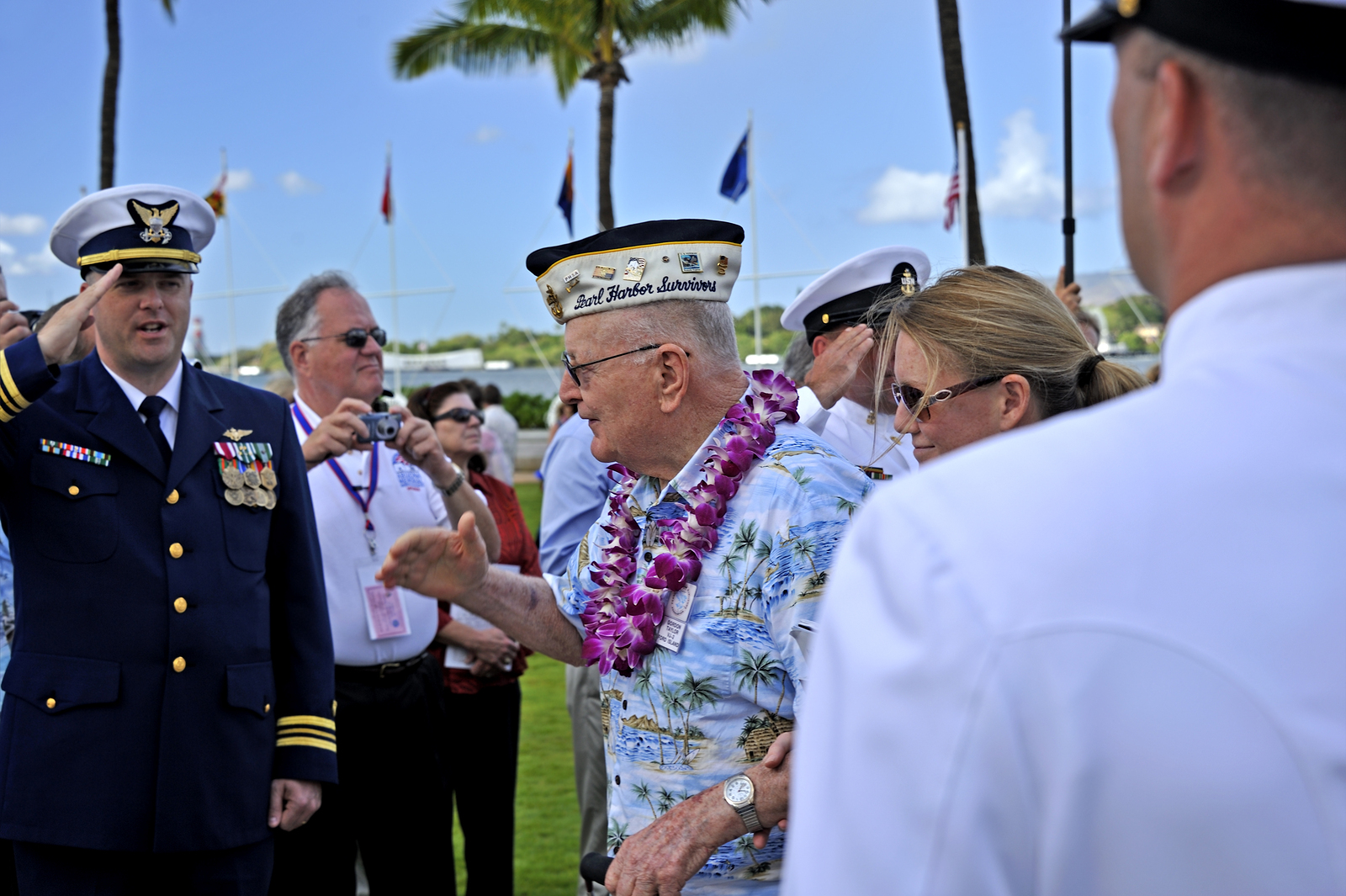
How Many Were Killed and Injured?#A handful of survivors from the USS Arizona attended the annual Pearl Harbor remembrance ceremony held on December 7, 2011.The Japanese attack on Pearl Harbor took only about 90 minutes. When it had ended, 2,403 Americans were dead and another 1,178 were injured, according to Wikipedia. Breaking down the American casualties by branch of service, the U.S. Navy took by far the biggest hit with 2,008 sailors dead and another 710 wounded. The U.S. Army's losses totaled 218 dead and 364 wounded; U.S. Marines counted 109 dead and 69 wounded. In addition to the military casualties, 68 American civilians were killed and another 35 were wounded. Eighteen American ships were sunk or run aground. Of the vessels lost, five were battleships. Because of the nature of Japan's sneak attack, Japanese losses were much more limited. Japanese dead totaled 64 (55 airmen and 9 submariners). The Japanese air force lost 29 planes with another 74 badly damaged by antiaircraft fire.


Had Japan Declared War on the United States?Admiral Isoroku Yamamoto, commander-in-chief of Japan's combined fleet until his death in 1943, reportedly had insisted that the attack should not begin until 30 minutes after Washington had been advised that peace negotiations were at an end and war was imminent. To that end, Japan had transmitted a 5,000-word message to its embassy in Washington that was to be handed over by the ambassador to the U.S. government. However, difficulty in translating the message into English resulted in a delay in delivering the message to the U.S. government. As a result, the attack on Pearl Harbor began before the U.S. government received any official word of the troubles to come.

Why Was the Death Toll on the USS Arizona So High?Although the USS Arizona was only one of 18 American ships either sunk or run aground in the attack, the death toll on the battleship was disproportionately high with the loss of 1,107 officers and crewmen. Japanese bombers made four direct hits on the Arizona, including one that pierced the ship's armored deck near the ammunition magazines in the forward section of the ship. Only seconds after the bomb hit, these magazines exploded, resulting in the extremely high death toll. 


---{-=@
Hickok

FIRST IMPRESSIONS 3rd SUNDAY OF ADVENT -C- DEC. 13, 2015

FIRST IMPRESSIONS  3rd  SUNDAY OF ADVENT  -C-   DEC. 13, 2015
      Zephaniah 3: 14-18  Psalm  12   Philippians 4: 4-7     Luke 3: 10-18

     by Jude Siciliano, OP

Could there be a lovelier reading at this time in Advent than our first
reading from Zephaniah? There’s a lot of joy and love in the passage.
Zephaniah helps us focus during, what should be, a quiet and reflective
time, but is mostly chaotic, noisy and hyperactive. (How many shopping
days till Christmas?) Previous to today’s section the prophet railed
against those who oppress and defraud the poor. God is coming and what
will God do when God arrives? Deal with Judah’s unjust leaders. “The
Lord has removed the judgment against you he has turned away your
enemies.”Through the prophets, like Zephaniah, God made promises to the
suffering and oppressed.  God will tend to the victims of those corrupt
leaders. Later in Luke, Mary, in her Magnificat, will proclaim that God
has lifted up the lowly and put down the powerful (Luke 1: 46-55).

Today’s passage speaks about the past: when God acted on behalf of the
people, and the future: when “The Lord your God is in your midst, mighty
Savior.” The people are joyful because of what God has done for them:
“removed the judgment against you.” God is also moved by what God has
done: “God will rejoice over you with gladness and renew you in his
love.” It gives God joy to act on our behalf.

When we experience how God has lifted the load of oppressors off our
shoulders, we fall even more deeply in love with God. Zephaniah pictures
that future – there will be no more conflict, fear or shame among us. He
is preparing us for Christ’s birth, encouraging us not to be afraid or
discouraged by what seems irreparable and unmovable in our lives.
Indeed, we will have reason to rejoice. The prophet prepares us to hear
Luke’s gospel during this new liturgical year. Throughout that gospel
Luke will tell the frightened, “do not be afraid.”  Joy is another theme
in Luke: how could people not be joyful? We were stuck and bogged down
and God sent Jesus to set us free, fulfilling Zephaniah’s promise, “The
Lord your God is in your midst, a mighty Savior.”

Who could be in more need of that Savior than the ones who came to John
the Baptist in the desert? We are getting closer to Christmas, yet the
characters in today’s gospel are:  a firebrand prophet, the crowds, the
disreputable  people in the community and Roman soldiers. We may be 12
days from Christmas, but we need to get our minds off our Christmas list
and listen to what John tells them, because there is no avoiding him today.

If we are going to welcome the Christ child at Christmas we will need to
face what will hinder our openness to him and dampen our welcome. We
could ask the repetitious question the three groups asked John, “What
should we do?” The issue at this point is not what people should ponder,
or think about doing. The imminent coming of the Messiah requires action
now. They are to do something and do it now. No putting off action.

John the Baptist tells the crowds, tax collectors and soldiers to do
practical things: take care of the needy and act justly. He didn’t tell
them to go to the Temple and pray more, or offer a large sacrifice.
Ritual and prayer will come later. First things first: make practical
changes by responding to the needs of your neighbor. That will prepare
them and us for the coming Messiah.

The crowds are to share what they have with those who do not have. Tax
collectors must be fair in their work and avoid greed. “Stop collecting
more than is prescribed.” Then, there are the soldiers. Who would have
expected these outsiders, the enemy occupiers, to be listening to a
Jewish prophet! He tells them, “Be satisfied with your wages.” They had
power and could use it to their advantage over their subjects. Instead,
they were to be “satisfied” with what they had – that was enough.

John was a powerful preacher. He was a “this-world-preacher.” He offered
a practical work ethic. He anticipated the Messiah and advised very
practical preparations. People were to use their resources for those in
need. No fancy, esoteric, mountain-top preparations for John. Instead,
he told people to do the right thing in their everyday lives. If they
did, they would be ready for the “more” the Messiah would bring.

And what would that “more” be? John’s message anticipates the coming of
the kingdom in its fullness. When the Messiah comes to baptize, John
tells the people, he will do so with water – for purifying the
recipients. Still more. John says that Jesus will baptize with “fire and
the Holy Spirit.” We know in Luke’s second book, the Acts of the
Apostles, the Holy Spirit came upon all the believers.  Luke anticipates
that happening at Pentecost when the Spirit came and filled them with
fire, in the form of tongues resting upon them. Isaiah foretold such a
purification (4:4-5) and Ezekiel had promised the Messiah would give a
new spirit (Ezekiel 36:26).

So what is this “good news” that John is preaching to the people? It
doesn’t sound like what the later church will call good news. He calls
the people to evaluate their lives and prepare for God’s coming
judgment. John is not merely a ranting and raving preacher trying to
stir up a response to his message by evoking fear. The reference to the
winnowing separating wheat from chaff and the chaff burning in
unquenchable fire, are less about punishment and more about saving the
wheat. The burning chaff image can distract us from seeing the real
purpose in the metaphor – to save the grain. That’s the good news in
John’s message to us.

As diverse as John’s listeners were, they were open to his message and
wanted to know what they should do to prepare for the Messiah’s coming.
“What should we do?”  It’s the question we, the baptized, should ask
during Advent. In our baptism, the promise John made, that we would be
baptized with “the Holy Spirit and fire” is fulfilled.

Now, this Advent, we who are baptized with the Holy Spirit ask the
question at this Eucharist. “What should we do?” We pray to the Holy
Spirit that like John’s audience, we might receive some specific
directions for what we must change in our lives. We hope for the
determination and drive of the fire, as well as the guidance of the
Spirit, that we might be enabled to make the changes we must to receive 
Christ, when he comes this Christmas. And that Spirit, as John promised,
will surely come with cleansing and renewing fire.

Click here for a link to this Sunday’s readings:


     JUSTICE BULLETIN BOARD
Brothers and sisters: Rejoice in the Lord always. I shall say it again:
rejoice! Your kindness should be known to all. The Lord is near. Have no
anxiety at all, but in everything, by prayer and petition, with
thanksgiving, make your requests known to God. Then the peace of God
that surpasses all understanding will guard your hearts and minds in
Christ Jesus.
Philippians 4: 4-7
As I am writing this, the world is reeling from multiple aggressions by
terrorists in Beirut, Lebanon, and Paris, France, and millions of people
are fleeing from war-torn areas. It is hard to fathom the depth of
murderous hatred toward liberty, equality, and fraternity. So much
darkness and yet, today is Gaudete (“Rejoice”) Sunday and also the day
when our Church ceremoniously opens the “door” at designated Cathedrals,
basilicas, and churches around the world to announce the Extraordinary
Jubilee Year of Mercy. If we take this Year of Mercy to heart, our
ability to express mercy will be tested in the fire of reality and not
merely be an academic exercise. In my recent work with Peace Week
Raleigh this past September, I came across “The Decalogue for a
Spirituality of Nonviolence” written by Franciscan Sr. Rosemary Lynch,
OSF, and Friar Alain Richard, OFM. Perhaps their wise guide will help us
live this Year of Mercy more fully. I have included the main points below.
Active Nonviolence calls us:
1. To learn to recognize and respect “the sacred in every person,
including in ourselves, and in every piece of Creation.
2. To accept oneself deeply, “who I am” with all my gifts and richness,
with all my limitations, errors, failings and weaknesses, and to realize
that I am accepted by God.
3. To recognize that what I resent, and perhaps even detest, in another,
comes from my difficulty in admitting that this same reality lives also
in me.
4. To renounce dualism, the “we-they” mentality.
5. To face fear and to deal with it not mainly with courage but with love.
6. To understand and accept that the New Creation, the building up of
the Beloved Community is always carried forward with others.
7. To see ourselves as a part of the whole creation to which we foster a
relationship of love, not of mastery, remembering that the destruction
of our planet is a profoundly spiritual problem, not simply a scientific
or technological one. We are one.
8. To be ready to suffer, perhaps even with joy, if we believe this will
help liberate the Divine in others. This includes the acceptance of our
place and moment in history with its trauma, with its ambiguities.
9. To be capable of celebration, of joy, when the presence of God has
been accepted, and when it has not been to help discover and recognize
this fact.
10. To slow down, to be patient, planting the seeds of love and
forgiveness in our own hearts and of those around us. Slowly we will
grow in love, compassion and the capacity to forgive.
To read the complete decalogue, go to:

Rejoice! Activate mercy in your life.
----Barbara Molinari Quinby, MPS
Coordinator of Social Justice Ministries     Sacred Heart
Cathedral--Raleigh, N.C.

     FAITH BOOK
we ask ourselves:
Am I giving the coming of Christ enough attention this Advent?
If not, what is distracting me and what can I do to be ready for him
when he comes?


--{-=@
Hickkok

Saturday, December 5, 2015

The Japanese Imperial Navy; They Are Enroute...

The Japanese Imperial Navy; they are enroute...


The Japanese Imperial Navy; they are enroute...

Lou Marconi On this day in 1941, the Combine Japanese Fleet receive Top-Secret Order No. 1: In 34 days time, Pearl Harbor is to be bombed, along with Mayala, the Dutch East Indies, and the Philippines.

 
Relations between the United States and Japan had been deteriorating quickly since Japan's occupation of Indochina in 1940 and the implicit menacing of the Philippines (an American protectorate), with the occupation of the Cam Ranh naval base only eight miles from Manila. American retaliation included the seizing of all Japanese assets in the States and the closing of the Panama Canal to Japanese shipping. In September 1941, Roosevelt issued a statement, drafted by British Prime Minister Winston Churchill, that threatened war between the United States and Japan should the Japanese encroach any further on territory in Southeast Asia or the South Pacific.

The Japanese military had long dominated Japanese foreign affairs; although official negotiations between the U.S. secretary of state and his Japanese counterpart to ease tensions were ongoing, Hideki Tojo, the minister of war who would soon be prime minister, had no intention of withdrawing from captured territories. He also construed the American "threat" of war as an ultimatum and prepared to deliver the first blow in a Japanese-American confrontation: the bombing of Pearl Harbor.

And so Tokyo delivered the order to all pertinent Fleet commanders, that not only the United States—and its protectorate the Philippines—but British and Dutch colonies in the Pacific were to be attacked. War was going to be declared on the West.

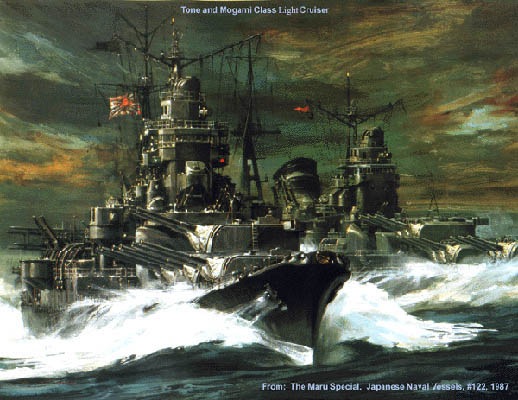
Lou Marconi The Battlecruiser Kirishima(IN THE ABOVE IMAGE) was designed by British naval engineer George Thurston. She served during both World Wars, and was the third launched of the four Kongo class battle-cruisers. She was among the most heavily armed ships in any navy when built.

Laid down in 1912 at the Mitsubishi Shipyards in Nagasaki; the ship was approximately 728 feet long and 101 feet wide, had a top speed of 30 knots, and had a crew of 1,360 officers and men. Kirishima was heavily armed with eight 14-inch guns, 16 6.1-inch guns, eight 5-inch guns, and numerous smaller caliber anti-aircraft guns. Kirishima was formally commissioned in 1915 on the same day as her sister ship, Haruna.

Ron George WW2 ships are beautiful but deadly works of art

Lou Marconi Ron George~~~the artist perspective is EXACTLY what I was trying to convey. Look at the 'lines'. Obverse the exquisite grace of this stately mass of steel weaving and slicing through the waves. the 'brutalistic-construction-theme' of its body-mass is that of a well-framed male-danceur as he springs extensions across his dance-floor.

Ron George British treaty cruisers from 1930 and the famous HMS Hood are considered yacht like.

Ron George The original USS Houston also was a beautiful ship with a yacht like bow


 On this day, December 6th, 1941, President Roosevelt—convinced on the
basis of intelligence reports that the Japanese fleet is headed for
Thailand, not the United States—telegrams Emperor Hirohito with the
request that "for the sake of humanity," the emperor intervene "to
prevent further death and destruction in the world."
The Royal Australian Air Force had sighted Japanese escorts,
cruisers, and destroyers on patrol near the Malayan coast, south of Cape
Cambodia. An Aussie pilot managed to radio that it looked as if the
Japanese warships were headed for Thailand—just before he was shot down
by the Japanese. Back in England, Prime Minister Churchill called a
meeting of his chiefs of staff to discuss the crisis. While reports were
coming in describing Thailand as the Japanese destination, they began
to question whether it could have been a diversion. British intelligence
had intercepted the Japanese code "Raffles," a warning to the Japanese
fleet to be on alert—but for what?
Britain was already preparing Operation Matador, the launching of
their 11th Indian Division into Thailand to meet the presumed Japanese
invasion force. But at the last minute, Air Marshall Brooke-Popham
received word not to cross the Thai border for fear that it would
provoke a Japanese attack if, in fact, the warship movement was merely a
bluff.
Meanwhile, 600 miles northwest of Hawaii,
Admiral Yamamoto, commander of the Japanese fleet, announced to his
men: "The rise or fall of the empire depends upon this battle. Everyone
will do his duty with utmost efforts." Thailand was, in fact, a bluff. Pearl Harbor
in Oahu, Hawaii was confirmed for Yamamoto as the Japanese target,
after the Japanese consul in Hawaii had reported to Tokyo that a
significant portion of the U.S. Pacific fleet would be anchored in the
harbor—sitting ducks. The following morning, Sunday, December 7, was a
good day to begin a raid.
"The son of man has just sent his final message to the son of God,"
FDR joked to Eleanor after sending off his telegram to Hirohito, who in
the Shinto tradition of Japan was deemed a god. As he enjoyed his stamp
collection and chatted with Harry Hopkins, his personal adviser, news
reached him of Japan's formal rejection of America's 10-point proposals
for peace and an end to economic sanctions and the oil embargo placed on
the Axis power. "This means war," the president declared. Hopkins
recommended an American first strike. "No, we can't do that," Roosevelt
countered. "We are a democracy and a peaceful people."


---{-=@
HICKOK 

10 Famous Elephants From History