Saturday, November 14, 2015

Crossing the Comfort Zone in Thailand; Don George of National Geographic Traveler November 3, 2015

Crossing the Comfort Zone in Thailand


The coast of Ko Samet, an island approximately 120 miles southeast of Bangkok, Thailand (Photograph by Sergey Belov/Alamy Stock Photo)


“An easy one,” I told the motorcycle rental man. “I haven’t ridden in a long time, so I’d like your easiest one.”
“Izzy wun,” he repeated, looking over the two dozen shiny cycles lined up in his parking-lot-cum-rental-shop on the island of Ko Samet, Thailand.
He strode forward and put his hands on a sleek machine with the red-and-yellow Manchester United logo painted on its side.
“Thiz izzy,”’ he said, smiling as he wheeled it over to me. “Mannches Yoonite,” he said, pointing to the logo and then to his eyes and his head, indicating that I should remember my bike by the distinctive logo.
He sat astride the bike and flicked up the kickstand, then looked at me. He put his hand on the left brake and squeezed it. “Bak brik,” he said. Then he put his hand on the right brake and squeezed it. “Fron brik.”
“Numbah wun bak brik. Allway bak brik.”
He released the back brake and then squeezed the front brake. “No bak brik, fron brak,” he said, and with his hands he portrayed the motorbike somersaulting through the air. “No goo.”
“Got it,” I said.
“Make go,” he said as he mimed turning the accelerator with his right hand.
“Now star.” He squeezed the left brake, turned the ignition key, then pushed a switch, and the engine magically chugged to life.
He turned off the key, stepped off the bike, and gestured for me to get on. “Yoo try.”
I repeated the three steps and the bike again chugged to vibrating life.

The best way to see Ko Samet? By motorbike. (Photograph by hempa, Flickr)
Motorbikes are a popular form of transportation on Ko Samet. (Photograph by hempa, Flickr)
Now came the problem. I knew I’d ridden motorcycles before. I’d definitely ridden them in Thailand 40 years ago and I was pretty sure I’d ridden a cycle or two since then, though I couldn’t remember when or where. And in one day on this tranquil Thai island, where the only cars were pick-up-truck taxis, I’d seen all manner of humanity, young and old, tourist and local, blissfully motorbiking along the roads.
How hard could it be? I’d asked myself over breakfast earlier that day, studying a map of the compact island and conceiving this suddenly death-defying plan.
The problem was that the rental place was situated halfway down a steep hill, and the downhill portion of the hill was a national park off limits to motorcycles, so to get out of the shop, I had to gun the engine to ascend the hill and simultaneously turn a hard right to get onto the road, which was still slippery-slick from last night’s rain, then avoid plunging straight into the viney hillside opposite.
I got on the bike and tentatively gunned the engine. The cycle spurted forward and veered crazily to the right and my left leg shot out and my sandals skip-skip-skipped along the road and I barely stopped the cycle before tumbling ignominiously onto my side.
The rental man’s grizzled partner walked up and looked me over. “You OK?” he asked, clearly indicating that he thought I would be better off spending the day reading a book on the beach under the palms.
“I’m not sure,” I said, and at that moment alternative scenarios flashed through my mind.
I could give up on the motorcycle idea and instead take a taxi to town and spend the day walking around. I could even take taxis to some of the more remote beaches and just explore the island that way. But how would I find a driver in the middle of nowhere? On the other hand, I could simply lounge on the beach at Ao Prao, lazing under the palms and swimming and napping and scribbling in my journal. That would be a fine way to spend a day.
But I wanted to explore the island. And the only practical way to explore the island was on a motorbike.
“I’m OK, “I said, definitively.
“OK,” the rental man said. He got on the bike and indicated that I should climb on behind him.
I held on and he started the bike and made the turn onto the road and then gunned the engine up the hill until we reached a spot where the road leveled off. He stopped, turned off the engine, got off the bike, and patted me on the back. “You OK,” he said.
“Thank you!” I said, grateful for the reassurance. Then, too terrified to even look back, I squeezed the left brake, turned the key, flicked on the engine, and gave it the gas. And off I flew, wobbling a bit to get my balance at first but then straightening out and wheeling along the sun-dappled road.
We all have our comfort thresholds. For some it may be zip-lining in Costa Rica or bungee jumping in New Zealand. For others it may be eating that first slice of sashimi in Tokyo or plunging into the subway in New York.
While the actual challenge differs hugely from person to person, the process of confronting the challenge, of crossing our comfort threshold, is essentially the same. The pulse quickens, the heart pumps, the mind weighs the pros and cons, desperately groping at all manner of excuses and alternatives—and then, in one impetuous, soul-soaring moment, we say, “I’m going to do this!” And off we go.
Of course, these thresholds exist for good reason, and it’s not always wise to trespass them. Sometimes we weigh the risks and benefits and decide not to descend that treacherous-looking path or board that sketchy bus or eat that bowl of questionable mush.
But often, the thing that really holds us back is our fear of failure. And to my mind, in most cases, the biggest failure of all is not trying.
My day on Ko Samet turned out to be glorious. I bounced along tree-shaded seaside paths as the wind whipped by, cooling my red-kerchiefed head. I breezed down the town’s main street, past silk shops and sizzling food stalls, then followed the coastal road south to hidden beaches and ramshackle resorts. I splashed through puddles and wound up hills and stopped to admire sweeping views over the glinting Gulf of Thailand. Eventually I reached the literal end of the road at Ao Pakarang, where I parked my bike and walked for 15 minutes through thick trees to the southern tip of the island. It was exhilarating.
I had so much fun that I kept the bike many more hours more than I intended to, and when I finally, and reluctantly, decided to head back to the rental shop, night had fallen. It took me a few minutes to find the headlight switch, but once I did, I was ready to ride.
The air was cool, and the jungle beside the road was alive with night chirps and trills and hoots. The smell of smoke laced the air, the moon shimmered off the sea, and a thousand stars lit the sky. At one point I felt like I was riding through those stars.
When I reached the bike shop, the rental man greeted me with a wide smile. “OK?” he asked.
“OK!” I replied. And as I handed him the keys, we both knew he’d given me more than a motorcycle ride.
Don George is an editor at large at Traveler and the author of The Way of Wanderlust and Lonely Planet’s Guide to Travel Writing. He has also edited award-winning travel writing anthologies, including An Innocent Abroad. Follow Don on Twitter @don_george.

 The best way to see Ko Samet? By motorbike. (Photograph by hempa, Flickr)
Motorbikes are a popular form of transportation on Ko Samet. (Photograph by hempa, Flickr)


---{-=@

HICKOK

Monday, November 9, 2015

100 Things Every Western New Yorker Should Do At Least Once - Eternal Flame at Chestnut Ridge

100 Things every Western New Yorker should do at least once - Eternal Flame at Chestnut Ridge 


Natural beauty: At top, David Galaniec of North Buffalo and Desiree Wagner of Cheektowaga relax after navigating the path to the Eternal Flame and waterfall on Shale Creek. Above, hikers meander up the trail, which includes cliffs, ravines, stairs and some treacherous stretches.                           

Natural beauty: At top, David Galaniec of North Buffalo and Desiree Wagner of Cheektowaga relax after navigating the path to the Eternal Flame and waterfall on Shale Creek. Above, hikers meander up the trail, which includes cliffs, ravines, stairs and some treacherous stretches. Photos by Sharon Cantillon/Buffalo News


It is Buffalo’s night light. It’s our candle in the wind. Night and day, at Chestnut Ridge Park, the Eternal Flame flickers. ¶ Fed by natural gas, the flame burns deep in the woods, at the bottom of a ravine, in a crevice of a waterfall in Shale Creek called the Eternal Flame Falls. Reaching it involves an eventful hike, which is why I had never seen it. Getting my feet wet, stumbling over slippery rocks – oh no, thank you. I don’t even own hiking boots. ¶ But where there’s smoke, there’s fire. Eventually I could not resist finding out what the fuss was about. ¶ With which, two of us drove to Orchard Park and, following the Internet’s advice, found our way to Seufert Road and parked on the shoulder. There is a parking lot not far away, connected to what we later heard was a shorter trail to the flame. That meant we took the long route. Well, why not? The November day was unseasonably warm. The sky was bright blue.


 The woods were lovely, dark and deep, and we had promises to keep. The trail has virtually no signs. You kind of feel your way along. We proceeded purposefully, leaves crunching underfoot. The outside world quickly vanished. Sky-high, perfectly straight trees blotted out the sun.

     
The eternal flame at Chestnut Ridge Park in Orchard Park is almost always lit do to the emission of natural gas from the shale. It draws lots of visitors to see this mysterious little flame tucked behind a waterfall on Shale Creek. After seeing the flame, it’s a beautiful walk back, Wednesday, Nov. 4, 2015. David Galaniec of North Buffalo and Desiree Wagner of Cheektowaga head toward the eteranl flame. (Sharon Cantillon/Buffalo News) 


It cast a shadow on the adventure that people have died here. You have to stick to the trail, particularly at the top of the ravine, Otherwise, cliffs creep up without warning, and you could tumble over. Guided by crushed leaves and worn steps, we made our way carefully along. Shale Creek lay far below us. Treetops sparkled overhead.
“There’s a little challenge, but it’s an easy challenge,” was how one hiker we met, Kohava Howard, put it. Howard, who lives in Williamsville, had brought along a friend from Israel and a big, well-coiffed poodle named Oreo. Good dog! If Oreo, with her curls, could carry this off, so could I.

 
The eternal flame at Chestnut Ridge Park in Orchard Park is almost always lit do to the emission of natural gas from the shale. It draws lots of visitors to see this mysterious little flame tucked behind a waterfall on Shale Creek. Photo taken, Wednesday, Nov. 4, 2015. (Sharon Cantillon/Buffalo News) 


Reaching the creek, I found that the heart of the challenge, but also the beauty of it, lay in calling into play skills I had not used since I was little. Trying not to fall off a log. Navigating wet stepping stones. Keeping my footing on a muddy, slick bank of shale. Making Tolkien-like choices: What rock could you trust? Which side of the stream was the better bet? What was the best way to approach that slick bank of shale?
Next time I’ll do better. I won’t carry a purse. I will carry a big stick, as did two other visitors, Desiree Wagner and David Gdaniec. Wagner said the stick helped her survive a particularly treacherous stretch.
“I would have been lost without this bad boy,” she laughed.

 
The eternal flame at Chestnut Ridge Park in Orchard Park is almost always lit do to the natural emission of natural gas from the shale. It draws lots of visitors to see this mysterious little flame tucked behind a waterfall on Shale Creek. Many are on the trail to the eternal flame on a warm November day, Wednesday, Nov. 4, 2015. Sandra Chudzinski, left, and her husband Richard Quinn, of Lancaster have some lunch on the way. (Sharon Cantillon/Buffalo News) 


The nice thing is that once you’ve reached the creek, it’s pretty certain you won’t get hurt. So really, it’s just a game, the object of which is not to fall on your rear. Succeeding makes you feel like Magellan. Look, you want to proclaim. I conquered that slippery slope. I crossed that log.
I made it to the flame!
We were there before I knew it. Less than an hour after we set out, there it was – a trickling, tumbling column of waterfalls. And behind one of the waterfalls, that fire burned.

 
 The eternal flame at Chestnut Ridge Park in Orchard Park is almost always lit do to the natural emission of natural gas from the shale. It draws lots of visitors to see this mysterious little flame tucked behind a waterfall on Shale Creek. Many are on the trail to the eternal flame on a warm November day, Wednesday, Nov. 4, 2015. (Sharon Cantillon/Buffalo News) 


The Internet had said to bring a barbecue lighter just in case the flame had gone out. Obediently, I had stashed one in my purse. But this flame was just fine. It was three or four tiny flames, actually, dancing behind the babbling water.
What a curious sight! Oreo, the poodle, had reached the flame too. She and I stood together and marveled.
As did about a dozen other visitors, a diverse and appreciative group of humans and dogs. There was something sweet about the scene, about all of us here in the middle of a forest, basking in the sight of this little flame.
email: mkunz@buffnews.com


Thursday, November 5, 2015

The 4 Worst Mistakes Of The Axis Powers During WWII

The 4 Worst Mistakes Of The Axis Powers During WWII


Looking back at WWII there have been 5 decisions made that, in the end,  did not work out to the Axis advantage. Of course you can argue that starting the war in the first place was the biggest mistake made. but, for the sake of the argument, let us look at 5 mistakes that were made after the war was started.

Nazi Alliance with Fascist Italy
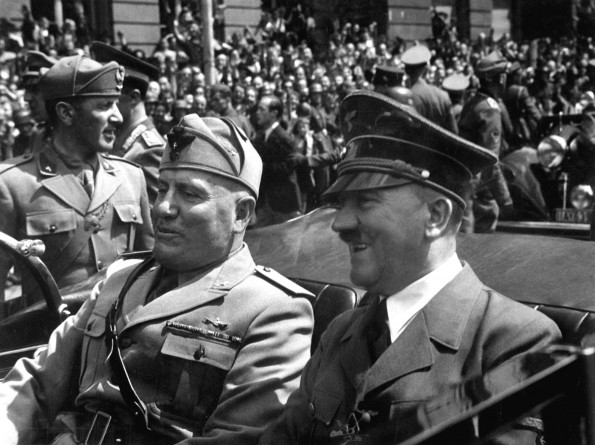
Hitler_and_Mussolini_June_1940-595x445Mussolini and Hitler in the heady days of 1940 (Bundesarchiv)

Having allied themselves with Italy, although ideologically similar, was something that the Nazi’s should have forsaken. Time and again the Nazi’s were forced to come to the aid of Italy after the fascists launched an ill conceived invasion or bitten off more than they could chew.
Getting the German forces involved in North Africa, a costly side show, was bad enough but the forced German invasion of Greece could not have come at a worse time.
In March of 1941 Mussolini, the Fascist dictator of Italy, was still angry with Hitler after he failed to inform the Italians beforehand of his plans to invade France and the low countries. This made Mussolini decide he was going to surprise Hitler and invade Greece without telling him. The Italian advance quickly bogged down and after a few weeks the Greeks had fought them back to their starting point. The British came to the aid of the Greeks and landed forces in, what Churchill always called, the soft underbelly of Europe.
This loss of face for the Axis powers could not be accepted by Hitler who ordered his generals to come up with a plan to secure his, now vulnerable, Southern flank. This meant that the Invasion of the Soviet union, that was supposed to be start in early spring, had to postponed to June 22nd. As it turned out, this delay proved fatal.

Nazi invasion of Russia
main_1200German troops on the move in Russian (Bundesarchiv)
Even though it was inconceivable that Nazi’s would not invade the Soviet Union, so was the Molotov-Ribbentrop pact which they signed on August 13th 1939. This non-aggression pact allowed Nazi Germany to invade Poland without having to worry about a possible war with the USSR. It even went so far that Poland was divided among the two and the part that the Soviets took in September 1939 has never been returned to Poland. It also gave the Soviets free reign in expanding its influence in the Eastern European countries and they lost no time in subjecting them to their rule.
The fact that the two sworn ideological enemies were willing to sign a non-aggression pact shook the world and allowed Nazi Germany the time to focus its attention on the west without having to fear a war on two fronts. Germany made the most of this freedom and, in quick succession, defeated Denmark, Norway, The Netherlands, Belgium and France. Only their planned invasion of the United Kingdom was thwarted by the Few of the Royal Air Force, the first setback for the Nazis. Deteriorating weather caused the invasion of Britain to be postponed indefinitely and Hitler once more turned to the East where, according to his book Mein Kampf, he believed the “Lebensraum” (living space) was which the Germans needed above all other things. However, this living space was occupied by the Russians which had now moved it’s western borders hundreds of kilometers closer to Nazi Germany as a result of the pact.
Unwilling to knock Britain out of the war first and thus faced with a war on two fronts, which Hitler had vowed to avoid at all costs, he invaded the Soviet Union. Hitler was confident the Soviet Union would be defeated in mere weeks and he is quoted as having said “We have only to kick in the door and the whole rotten structure will come crashing down”. However most of the first month, if not 6 weeks, was spent fighting a way through countries now occupied by the Soviet Union. These countries might otherwise have been ensnared into the Axis camp, as some were later to join, had it not been for the pact.
The extra territory gave the Soviets the ability to trade space for time and, with the extra delay caused by the invasion of Greece, meant that Nazi Germany could not complete it’s conquest in during the remaining period of good weather. The autumn rains rolled in and turned most of Russia in a quagmire of mud which made all movement virtually impossible. Then winter arrived early and with extreme cold for which the Germans were not equipped.

Attack on Pearl Harbor
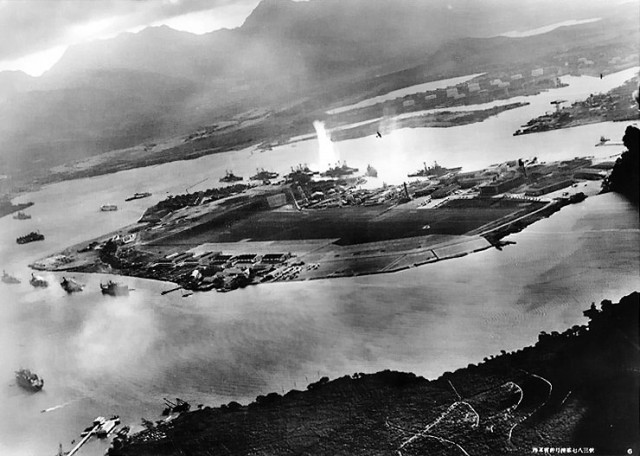
Attack_on_Pearl_Harbor_Japanese_planes_viewPhotograph taken from a Japanese plane during the torpedo attack on ships moored on both sides of Ford Island shortly after the beginning of the Pearl Harbor attack.

A history similar to the German attack on the Soviet Union, the Japanese wanted an empire of their own in order to secure the future prosperity of a country which they thought did not have enough natural resources to sustain the population. The Germans called it “Lebensraum”, the Japanese the “Greater East Asia Co-Prosperity Sphere”, it amounted to the same thing. Having occupied vast portions of China and a number of countries in East Asia the next step was to expand it’s empire east into the Pacific ocean. Their eye was on the prosperous and natural resources that were under the control of the British and Dutch empires and the American governed Philippines. However attacking these would cause the United States to join the war on the side of the allies.
America, on the other hand, had kept an eye on Japanese conquests and brutality and, short of war, did what they could to restrict them. In July 1941 they embargoed the export of oil to Japan which then calculated that, without acquiring the oil in the Dutch East Indies, they only had enough fuel for two years. They reasoned that now there would be no other option than going to war.

Realizing that they could not defeat the USA in direct battle they chose to deliver a crushing blow to the American fleet based at Pearl Harbor. This would give them time to complete their desired conquests and present the Americans with a “fait accompli”. They reasoned the Americans would not be willing to enter a protracted war with Japan and they would be able to make peace, keeping their vital conquests and handing back the less desirable places.
Fate, or bad Japanese intelligence, intervened on the Allied side on December 7th 1941 and the vital American Aircraft carriers were not in port when the Japanese struck Pearl Harbor. This meant the Americans were able to fight back causing the Japanese Admiral in charge of the attack to say (supposedly) “I fear all we have done is to awaken a sleeping giant and fill him with a terrible resolve.”.

No alliance between the Nazis, Spain and Turkey
WWII_Europe_1941-1942_Map_EN
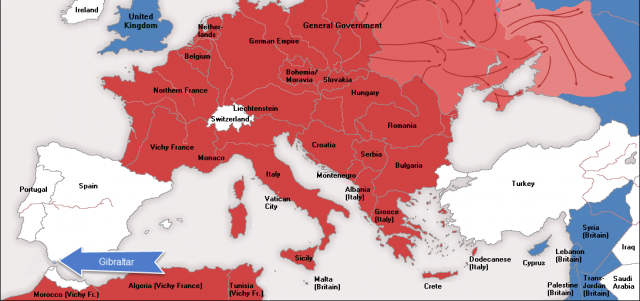
One look on the map of Europe will show the strategic importance of both Spain and Turkey, however these two, were two of the few countries on the European mainland that remained neutral during the second world war.


One look on the map of Europe will show the strategic importance of both Spain and Turkey, however these two, were two of the few countries on the European mainland that remained neutral during the second World War.

Even though Spain remained neutral during the First World War it was expected they would come in on the side of the Axis after all the help Hitler had given General Franco in the Spanish Civil war. However, despite pleading and perhaps even begging, Franco remained adamant. He would not join the Axis and would not even allow the Germans to pass through his country (as the Swedes did).
Not being able to pass through Spain meant that Great Britain was secure in using it’s military base in Gibraltar. This not only effectively sealed off the entrance to the Mediterranean from Atlantic ocean for the German Navy, it also gave the British a location from which it could support Malta and Egypt. Possession of Malta meant the British could interdict shipping from Italy to North Africa. Possession of Egypt meant it could stop the Axis from linking up with their forces fighting in the Caucasus (Soviet Union) and taking the much needed oil fields in the middle east.
Turkey fought on the side of the Axis in the First World War yet declined to join them in the Second. This, again, meant the Germans could not link up with their forces in the Caucasus making the capture of Egypt paramount. In February 1945, Turkey joined the allies and declared war on, a virtually defeated Nazi Germany.


---{-=@
HICKOK

Monday, November 2, 2015

Visit a classic movie theater

Visit a classic movie theater


The Aurora Theatre is a vintage movie theatre that opened its doors in 1925. (Sharon Cantillon/Buffalo News)     

The Aurora Theatre is a vintage movie theatre that opened its doors in 1925. (Sharon Cantillon/Buffalo News) 

  | 

When daylight saving time ends, when darkness falls early, when October goes – then it is time to cocoon in our classic movie theaters.
Western New York is lucky to have several gems. The movie palace once called Shea’s Buffalo shows movies sometimes. So does the whimsical Riviera Theatre in North Tonawanda. Old-time neighborhood theaters like the North Park Theatre on Hertel also hark back to an age when people dressed up to go to the movies, when it was an event.


Find a lovely old theater, and the escape begins before the movie does.
At the Aurora Theatre, on Main Street in East Aurora, you can stand outside on the sidewalk and feel as if you have stepped onto an old-time movie set. Vidler’s, the famous five-and-ten, is across the street. Fowler’s Chocolates is next door. As dusk closes in, the theater’s 1950s marquee lights up in fanciful colors. Chaser lights zip along the edge.


Inside, floor-to-ceiling murals, original to the theater, depict slim, unclad nymphs. The artist was Margaret Evans Price, the children’s book illustrator married to Irving Price, co-founder of Fisher-Price.
“Boys walk in and giggle,” confessed Lynn Kinsella, who bought the Aurora five years ago. She said the murals spent several decades in storage, and later, puritans placed plants strategically to give the nymphs some cover. Now, the nymphs appear just as God, and the artist, made them. Nearby looms a vintage projector. Over the concession counter is the original marquee. This place takes the past seriously.


The concession counter is situated so you can buy treats without missing the movie. Lucky for me, because the theater’s new Popcorn Shop offers flavors including cheddar, caramel, Buffalo chicken wing and dangerously delicious apple pie. Traditional popcorn is soaked with butter on request. I requested it.
Teens were drifting in, in groups and in couples. So were seniors. We followed along – a big group, including my sister, my two teenage nieces, Rose and Millie, their exchange student, Rodrigo, and their wild little brother, George Henry. I doubted George Henry could sit through “The Intern,” which had no light sabers or pirate ships. But we would see.


Settling into two back rows, we seemed to enter a new dimension.
Kinsella jokes about how it sounds when the Aurora is packed with children, all crunching popcorn. “It’s like termites,” she said. This evening, a weeknight, was less crowded. But we sensed our fellow moviegoers out there in the darkness, like distant planets.


“The Intern” had enough slapstick to please George Henry. The other kids, scarfing popcorn, seemed happy too. Millie, our younger teen, got misty over a sweet scene in which Robert De Niro and Anne Hathaway, who is half his age, watch “Singing in the Rain.” The clip shown was Gene Kelly crooning “You Were Meant For Me.”


“That’s my favorite movie,” Millie whispered. About De Niro: “I wish I had a friend like that.”
Nostalgia washed over me. That one moment bridged so many generations, in so many ways. To complete the picture, I had just learned that the Aurora had opened June 2, 1925, the day my mother was born. Surely she was with us, in spirit.


That is what a classic theater gives you – beauty and a sense of timelessness. Seek one out the next time you go to the movies. The nights are long. The marquees beckon.


You might even want to dress up.


---{-=@
HICKOK

Monday, October 26, 2015

The indispensable value of authenticity~~~~~~~~~~~~~~~~~~~~~

The indispensable value of authenticity: Chautauqua Amphitheater connects us to our extraordinary past

Chautauqua Amphitheater connects us to our extraordinary past.

    
Chautauqua Amphitheater connects us to our extraordinary past
By Kevin Gaughan
SPECIAL TO THE NEWS

Late afternoon sunlight bounces off nearby pastel cottages and slips under the raised roof, illuminating rows of benches with a pink and gold as only a Western New York sunset can. The warmth of summer is gone, along with the bustling hum of an audience seeking to enrich its mind and lift its spirit. This day it’s a placid, peaceful space. Yet even without the sounds of a scientist speaking, a cellist playing or a poet reading, sitting alone in the Amphitheater at Chautauqua, I knew exactly where I was: a place where American history has been made, and the American experience improved.
The Amphitheater’s fate appears now sealed with the Chautauqua Institution’s decision to demolish and replace it with a more modern structure. That in mind, I visited it on a recent autumn day and tucked into the fourth row, some 20 feet from the platform where Nobel laureates have preached, American presidents pondered and renowned artists performed. I closed my eyes and pictured just some who’d stood there: Franklin D. Roosevelt and George Gershwin; Ella Fitzgerald and Elie Wiesel; Reinhold Niebuhr and John Philip Sousa; Susan B. Anthony and Booker T. Washington; Eleanor Roosevelt and Amelia Earhart; Duke Ellington and Robert Kennedy. And in the crisp autumn air, I felt not their ghosts, but their genius.

To stir, lift and provoke

Founded in 1874, Chautauqua is our nation’s first think tank. It’s the place to which Americans repair every year to ponder who we are, where we’ve been and where we’re headed. And if Chautauqua is the historic center of the national body politic, then the Amphitheater is its heart. On summer mornings, as visitors scurry from their cottages and hotel rooms to file into the Amp for the day’s first lecture, it’s as if America’s blood is flowing inward, seeking nutrients to carry out to the nation’s farthest extremities.
In the Amp’s sheltered, outdoor bowl, scooped out of the rise of land that gently slopes down to Chautauqua Lake, ideas have been expressed that, as historian David McCullough noted in his seminal 1993 Chautauqua lecture, “moved not just the audience at hand, but the nation at large.”
On Aug. 14, 1936, America was deep in economic turmoil as the structures of world peace crumbled under Adolf Hitler’s marching boots. Americans had no stomach for more fighting so soon after World War I, and President Franklin D. Roosevelt was seeking to quell their fear. In a dark, driving rain, gripping hard the Amp’s podium to conceal his inability to stand on his own, Roosevelt declared, “I have seen war … I’ve seen blood running from the wounded. I’ve seen cities destroyed. I’ve seen children starving. I’ve seen the agony of mothers and wives. I hate war.”
As both governor and president, FDR visited Chautauqua frequently, in imitation of his uncle-in-law, President Theodore Roosevelt, who spoke in the Amphitheater in 1905, famously describing Chautauqua as “typically American, in that it is typical of America at its best.” In all, 10 presidents have been to Chautauqua, including Ulysses Grant, James Garfield, Rutherford Hayes, William McKinley, TR, William Howard Taft, Herbert Hoover, FDR and Bill Clinton.
But perhaps what most renders the Amp worthy of esteem are the powerful words that have been spoken there in support of social and political reform, propelling our nation from its adolescence into its adult self: Jane Addams, founder of Chicago’s Hull House, and Ida Tarbell, who exposed 19th century political corruption, were both Amphitheater speakers; Booker T. Washington, who in 1896 from the Amp’s platform implored America to “treat the Negro as a Christian gentleman, no more and no less;” and the Rev. Anna Shaw, a leader in women’s suffrage, who in 1892 told her audience that “any law which says that I cannot develop myself because I am a woman is utterly contrary to the will of God and contrary to the highest interest of womanhood.”
Eleanor Roosevelt brought her commitment to human rights to the Amp on several occasions, often combining a Chautauqua trip with one to Buffalo. When visiting the city, she usually stayed at the Delaware Avenue home of her longtime friend, Harriet Mack (805 Delaware, now the site of Temple Beth Zion). Mack, whose husband, Norman, owned the Buffalo Times, was a prominent member of the Twentieth Century Club. After addressing Chautauquans at the Amp and Buffalo women at the Twentieth Century Club within a period of months, Roosevelt told her friend that she was “heartened by the club, and lifted by the Amphitheater.”
On July 18, 1929, some 5,000 visitors in the Amp heard the hum of Amelia Earhart’s engine as she circled her plane over Chautauqua and landed on the 14th hole of the golf course just across the street. Earhart walked from the course to the Amp, “her infectious smile winning everyone in sight,” according to the Chautauquan Daily. Noting the already fleeting notoriety of her trans-Atlantic flight, which had taken place the previous year, Earhart told her audience that “just this morning I was congratulated for being the first woman to swim the Atlantic.”
But affection for Chautauqua and the Amp, as McCullough has noted, has not been universal. After a 1920 visit, Rudyard Kipling wrote that “Chautauqua lectures were no way for people to learn.” He called the institution “a lawn tennis tabernacle of the arts and sciences,” adding, “there’s something wrong with Chautauqua, and I don’t have the time to find out.” Words that come to mind when noticing, sadly, that the institution’s seasonal visitors remain to this day woefully lacking in diversity.

Authentic versus replica

In the late 1990s, New York State stood determined to bury the Commercial Slip and surrounding streetscape of the Erie Canal western terminus on Buffalo’s waterfront. Politicians sought to build a “replica slip,” thereby clouding the story of where the Erie Canal met Lake Erie, connected middle-America sellers with European buyers and changed the world. Our urban waterfront had been fallow for 50 years, and public desire for any development was at fever pitch. But preservationists, heritage experts and, most important, local citizens knew better.
In 2000, to educate politicians and galvanize citizens, I organized a public forum on the Erie Canal and development, bringing urban planners, cultural experts and canal historians from around America to Buffalo. Before the conference began, they all piled onto the historic fireboat Edward M. Cotter for a waterfront tour, during which they saw the original stones that frame the slip, and cobblestone streets that surround the terminus. Before disembarking, Jerry Adelmann, then president of the Canal Corridor of America, turned to me and said, “Buffalo must do whatever’s necessary to preserve the original slip, because authenticity tells stories like nothing else can.”
Through great effort by countless Western New Yorkers, the Commercial Slip was saved, ensuring that Buffalo’s history would form the centerpiece of development on the Inner Harbor. And today, as tens of thousands of visitors flock to Canalside for activities year-round, what renders their experience unique is their sense that they are in a space indispensable to America’s story. Without that underlying narrative, visiting Canalside would be less meaningful and memorable.
Authentic spaces like the Erie Canal terminus and the Chautauqua Amp matter because in tactile manner they connect us to what took place there. They remind us that we are all part of a common thread, beneficiaries of those who went before, and stewards for those who come after. And they afford us the chance to touch yesterday, and thereby imagine tomorrow.

Balancing past and future

Scanning the rows of benches under its sloping roof, the weight of time is visible on the 122-year-old Amphitheater’s lopsided seats, and the narrow, steep, concrete aisles that separate them. The necessity for renovating the Amp is apparent. But the idea of erasing it from Chautauqua’s landscape is inconceivable.
As Americans, our heads know that if we refuse to embrace the future, we cease to live. But as human beings, our hearts feel that if we fail to honor the past, a part of us dies. Somewhere in between those two truths lies wisdom. And finding that reasoned course is the challenge that beckons not only those who govern Chautauqua, but all of us.
Like a family reuniting at home after periods of separation, the Chautauqua Amphitheater is America’s living room. A place to which we return in moments of challenge and joy, to pause, connect and think. And a place where, through the exchange of ideas, we remind ourselves that every human problem can be solved by human effort.
Demolishing the Amp will not silence the echoes of those heroic women and men who raised their voices and lifted a nation here; those echoes still bounce off the pillars and posts that gallantly hold up this uniquely American space. But it will make their sound more faint, less poignant and more difficult for future generations to hear.
Kevin Gaughan, a Buffalo civic leader, founded the Chautauqua Conferences on Regionalism and the Erie Canal Conversation. His email is kevin@kevingaughan.com


---{-=@

HICKOK

Viet-Nam War Memorial; names listed by Location~~~Buffalo, NY Area

Viet-Nam War Memorial; names listed by Location~~~Buffalo, NY Area


BUFFALO, NEW YORK:

PFC JAMES EDWARD ANDREWS

SP4 RICHARD EARL BECKWITH
SGT LEONARD JONATHEN BELL
SGT JAN EDWARD BOBOWSKI Jr

SGT FREDERICK EARL BORCZYNSKI 
CPL KENNETH BOROWICZ
LCPL STEPHEN JOSEPH BORYSZEWSKI

HN DAVID HENRY BOSWELL 
SP4 MARTIN EARL BROPHY
PVT ANDREW THOMAS BROWN

CPL ROBERT JOSEPH BROWN Jr
PFC JAMES EDWARD BURNS
SP4 JOHN JAMES BURNS Jr

SP4 JUDGE BURROUGHS Jr
SFC HOWARD EARL BUTTON
SP4 SALVATORE CAMMARATA

PFC JAMES FRANCIS CARLONI
PFC CARMEN PAUL CARTONIA
PFC CARMINE CASILLO

SP4 RANDY LEE CAYLOR
SSG THEODORE ROOSEVELT CHAMBLEY
PFC MARK CHARLES CORBETT

PFC RICHARD P CORSON
PFC JAMES EDWARD CUMMINGS
PFC CLARENCE BENO CUNNINGHAM

SSG WILBUR CURRY Jr
SP4 NORMAN THOMAS D'AGOSTINO
CPL AGOSTINO WILLIAM DASARO

MAJ ROBERT DEGEN
PFC THOMAS CARL DELL
PVT JOHN FRANCIS DE WALD

PFC RICHARD ALLEN DEWANE
LTC ROBERT JOSEPH DI TOMMASO
CPL ROOSEVELT GEORGE DOCKERY

PFC WILLIAM EDMOND DONOHUE
CPL HENRY JAMES DOSTER
SP4 THOMAS EDWARD DOUGHER

PFC DONALD BARRY DRAY
PVT LEON TIMOTHY DUNCAN
LTC ROBERT RAYMOND DYCZKOWSKI

SP4 RICHARD NELSON EDDY 
1LT CHARLES HENRY EMERY Jr
LCPL PAUL MICHAEL EVANS

PFC ALBERT JAMES FARRELL Jr
PFC WILLIAM PETER FARRELL
CPL GARY CARL FASSEL

SSG DAVID LEE FENNESSEY
SP4 ROBERT VICTOR GAPINSKI
SP4 STEFANO GIARDINA

PFC CHARLES EDWARD GIBBS
1LT DANIEL NORBERT GLOWACKI
SFC RONALD ANTHONY GOLWITZER

SGT DONALD HENRY GREINER 
PFC JAMES ANDREW GRZEGOREK
PFC JOSEPH JOHN GUCWA

SP4 RICHARD MARK HAMMOND
SP4 MICHAEL NATHAN HARLEY
PFC DUANE KENNETH HEISER

SP4 THOMAS GEORGE HENSON
LCPL WILLIAM HERSHAN
PFC JAMES WALLACE HILL Jr

CPL BERNARD GEORGE HITRO Jr
CPL GEORGE WILLIAM HOLL
LCPL JAMES DAVID IMERESE

SP4 SANFORD LEVON JACKSON Jr
LT THOMAS PAUL JONES
LCPL PATRICK MICHAEL JORDAN

PFC BRYAN THEOTIS KNIGHT
SP4 DONALD PAUL KNUTSEN
PFC FRANK ANTHONY KRIEGER

PFC PAUL JOHN KRONTHALER
COL THEODORE EUGENE KRYSZAK
SSG JAMES DAVID KURTOWICZ

SSG ROGER THOMAS LAGODZINSKI 
CPL KENNETH JOHN LE CASTRE
PFC ERIC OAKLEY LEWIS

LCPL GIANCARLO LUCCHESI
PFC WILLIAM JAMES MACK
SGT HENRY MADISON Jr

PFC WILLIAM JOHN MAKOWSKI
GT EDWARD EMIL MANNS
PFC THOMAS VINCENT MARCHESE

PFC JAMES RUFUS MATHIS
SP4 ROBERT WALTER MAY
CPL THOMAS ANDREW MAY

PFC GERARD ROBERT Mc CONNELL
PFC JAMES GLENDALE Mc COY
AN MICHAEL KELLY Mc GUIRE

PFC RAYMOND JAMES METTY
PFC LARRY ALLEN MILES
SP4 THOMAS WILLIAM MITCHELL

CPL FRANCIS GEORGE MONIN
PFC JOSEPH ANTHONY MOTT
LTC JOHN JAMES MOTT

PFC CARY NEAL
PFC CALVIN IAN NESBITT
PFC TIMOTHY JAMES NIGHTENGALE

SP5 JOSEPH ANTHONY NURZYNSKI
2LT MELVIN JOSEPH OWCZARCZAK
SP4 WILLIE LEE PAGE

SP4 ANTHONY PAUL PALUMBO
SP4 HENRY JOHN PAWLICK Jr
PFC THEODORE J PAWLOWSKI Jr

CPL DAVID HARLOW PHELPS
SGT DAVID JEFFERY PHILLIPS
CPT ROBERT JOSEPH POLNIAK

PVT BRENT ALEXANDER REEDER
SSG JOSEPH RICHARD REICHERT
WO JOSEPH ALBERT REICHLIN Jr

PFC DAVID RICHARD REYNOLDS 
LCPL WILLIAM JAMES ROGERS IV
PVT KEVIN MICHAEL ROHRING

SFC JAMES MILAN ROZO
LCPL DENNIS LEE SCOTT
LCPL DAVID ALLEN SCRITCHFIELD

CPL RICHARD EARL SERWINOWSKI 
PFC DONALD ELTON SHOEMAKER
CPL ELLIOTT SIMMONS Jr

LCPL DANIEL EDWARD SIRIANNI
CPL ROBERT JEREMIAH SMITH
CPL EDWIN JOSEPH SMOLAREK Jr

LTC JACK DOUGLAS SPAULDING 
CPT RICHARD MARION SROKA
LCPL KENNETH DAVID STANKIEWICZ

PVT MARSHALL GEORGE STEFFANS
SGT JOSEPH R STEINER III
2LT RONALD THOMAS STETTER

LCPL LAWRENCE STEWART
SGT LARRY RAYMOND SWISHER
PFC JOSEPH JOHN SYGNATUR

WO LESLIE MILES TATARSKI
SP4 CHARLES THEODORE THIELGES
HN JAMES WELDON THOMAS

CPL VERNON JOSEPH THORSTEINSON 
PFC PIERRE ANATOLE THREET
LCPL PAUL DOUGLAS TICE

CPL THOMAS DAVID TOMASZEWSKI
SSG GERALD JOHN TWOREK
PFC WALTER FREDRICK TYRCZ Jr

PFC GARY LAURENCE VANDERBROOK
CPT FRANK C WALLENBECK
1LT DANIEL ALBIN WIDOMSKI

SP4 MICHAEL BRODERICK WIER
WO CHARLES CHESTER WILCOX
SP4 GARY WISNIER CPT GERALD WRAZEN

SP4 JOSEPH ROBERT YOUNG
PFC WELDON HORACE YOUNG

PFC FRED CHARLES ZIMPFER
PFC RONALD WALTER ZYDE


---{-=@


HICKOK