Thursday, May 12, 2016

Youngsters Cheer For The Baseball Bisons @ Home Opener

Youngsters Cheer For The Baseball Bisons @ Home Opener during the afternoon of Thursday May, 5, 1966 @ War Memorial Stadium Jefferson & Best Streets; Buffalo, NY 14208

This story is featured in what was then called THE BUFFALO EVENING NEWS.

This was the evening newspaper in a city that, at the time, had two newspapers:
1]  The Buffalo Evening News~~~~which printed editions in the afternoon, and the 'Final' ----in the evening.

2]  The Courier Express~~~~which was Buffalo's 'morning' newspaper.


The front-page of this edition features an IMAGE of that afternoon's home-opener at War Memorial Stadium.  On a page that is customarily devoted to 'national' or 'world' news images, the Buffalo Baseball Bisons becomes the top-notch-consideration on this day !!

What caught my attention from a personal perspective was the article in the upper left-hand-corner of the Front-Page sub-titled JACKSONVILLE OPENS SCORING IN OPENER WITH A HOME RUN. [High-lighted #1]


In May of 1966, I am 14 years old; a freshman at a local Roman Catholic high school.

In terms of kids attending the home-opener, here is how this worked !!  Back then, there was no helicopter-parents; helicopter-moms.  Mom was home----as the house-keeper, and dad----was at work.  So~~~~12 years, and up~~~~if you could furnish a permission-slip signed by your mom or dad, seventh grade and eighth grade in public and private; Roman Catholic elementary schools-----and public high-school students ---  would be allowed to attend the opening game.


Cutting through the article, the first thing evident to me is that in 1966, Buffalo is no longer the farm-team of the New York Mets.  But rather, they are now the farm team ----  of the Cincinnati Reds.  Ironically, the Home-Opener opposition ----  the Jacksonville Suns, are now the farm-team of those same New York Mets.  On the mound for the Jacksonville Suns----the youngster; the one-and-only, Tom Seaver.  By 1969~~~~Tom Seaver would be the premiere pitcher in the Mets starting-pitcher-rotation, while being one of the premiere pitchers---in all of major-league baseball.  For a local kid; a local fan, I now have to recognize that gone from the line-up landscape were such favorites as Elio Chacon, Pumpsie Green, and Choo-Choo Coleman in the infield, and Duke Carmel in the outfield.

Believe it or not, up through 1965, other Bisons players that would end up becoming part of the 1969 Miracle-Mets World Series winning-team----would include Ron Swoboda, Cleon Jones, Ed Kranepool, and Jim Hickman !!

The paragraph:  ""The Suns opened the scoring in the first inning with Larry Elliot's two-out home run""  In 1965, Larry Elliot was with the Bisons; property of the News York Mets.  With Elliot throwing-left; batting left----his home-run was the result of accomplishing something ----  somewhat unique to baseball stadiums.

The right-field porch was very very short at War Memorial Stadium.  The 'Pole' was marked as 300 Feet !!  In all likelihood ---- it was shorter than that.   The right-fielder ALWAYS played, straight-away, on the right-field warning-track !!

To make this part of outfield more of a challenge to the batter.  the stadium had heavy-duty netting raising an additional 20 feet up from the right-field-fence---from the right-field foul-pole, to an upright-stanchion at the power-alley portion of right-field.  To get credit for the home-run, Elliot would have had to 'clear' that netting !!

What I found most fascinating about this article ---  was the third paragraph:  Buffalo manager Red Davis, hoping to arouse the Bisons from their slump shook-up the batting order again, dropping Joe Hicks and Len Boehmer down to No. 7 and; No. 8. [in the line-up].

JOE HICKS !!   My God !!  Joe Hicks !!

Joe Hicks must not have been Mets-property.  I am not even sure he was any Major-League team's property.  Why?!?!?  Because Hicks had been in the Bisons line-up for the last couple of years.  If he was 'Mets-property',  he would now be in the Suns line-up.  All of the 'reference-sources'  show his last official year of major-league affiliation---as 1963.  His first-year in major-league baseball is shown as 1953.  By 1966, he is a veteran in the zenith of his career. While this is only speculation, I am suspecting that these last years with the Buffalo Baseball Bisons has him getting paychecks from the Bisons front-office.

I will always remember----Elio Chacon, Pumpsie Green, Choo-Choo Coleman, and others, but~~~~I will ALWAYS remember Joe Hicks.  Joe Hicks was a left-handed batter;  and----always, a mediocre one---at best !!  But what for me set Joe Hicks apart from ANYBODY else who I have ever observed playing baseball was his 'routine' in the batter's box.

Joe Hicks had this very very exaggerated routine while awaiting his next pitches.  This had to have driven the umpires crazy, but they did not do anything.  This was still in the era of laissez-faire regarding trying to control the game; trying to not have the baseball-game drag-on infinitum as the umpires now try to do by using implemented rulings to keep the game moving along so that it ends at least by the end of three hours !!

Joe Hicks however, was in another world !!

While it seemed as forever, his between-pitch-routine had to have lasted a good two-minutes!!  And this is no distortion of the truth. He would kick, scratch, then kick again the surface in the batter-box with his cleats.   And then---to just make sure that he had that surface-area in the batter's box JUST RIGHT, he would raise to just the sole-portion of his cleats and do a couple of back-and forth spin-moves on them!!   In between all of this foot-work, he would intermittently be tapping the near, and the far-walls, of Home-Plate with his baseball-bat !!  And through all of this his batting average, at best, was mediocre.  But all these years later, Joe Hicks is still so vividly remembered.

And then ~~~~~~  there is the very very vivid recollection of 1964; and the Duke Carmel/Curt Blefary Home-Run-Rivalry !!

..................work in Progress


---{-=@

HICKOK


Wednesday, May 11, 2016

The destinations are crossword puzzles, And appearances can sometimes be deceptive!

The destinations are as crossword puzzles 
I was with you 
Among The Meadows With peaches 
Where were sprinkled the daisies! 
Feel the aromatic sensations 
Of the immense eucalyptus 
We refresh the soul with each the morning, 
Everything was perfect! 
We were in our universe! 
The Blue Sky painted over our sorrows! 
And I was in your eyes! 
As long as the wind was kissing our faces! 
A door had been opened. 
In the sanctuary of an oak! 
Together we decided to go in 
Inside her was the warmth of a heart 
And pleasing was our excitement 
To see under the wing of a bird 
The great secret of life is trying to stay together
Just listening to the  chirping
We thought, there was bitterness 
Wrinkled face
Frown, 
And the smiles perfume the dreams! 
The destinations are crossword puzzles, 
And appearances can sometimes be deceptive! 

Poet. Alice of the boat. January 16/2016 


---{-=@


HICKOK

Thursday, April 28, 2016

6 Famous Naval Mutinies November 6, 2012 By Evan Andrews

6 Famous Naval Mutinies


Few accusations in maritime history were more serious than the charge of mutiny. Yet that didn’t stop countless sailors from attempting open rebellions on the high seas. Most of these mutinies were violent outbursts provoked by poor morale or mistreatment, but others helped inspire revolutions and even toppled governments. Get the facts on six of history’s most ferocious naval rebellions.

The Mutiny on the Bounty

The Mutiny on the Bounty The 1789 mutiny on the Bounty saw a rebellious crew hijack their ship and build their own island community. Commanded by William Bligh, HMS Bounty left England in December 1787 on a mission to collect breadfruit saplings in the South Pacific. During a five-month layover in Tahiti, many of the ship’s crew became enamored with island life and even married the local women. They also became increasingly dissatisfied with Bligh, who often flogged his men for dereliction of duty. Shortly after the Bounty left Tahiti in April 1789, a group of disgruntled crewmembers revolted and took their commander prisoner. Led by master’s mate Fletcher Christian, the mutineers forced Bligh and 18 loyalists into a small launch and abandoned them at sea. Amazingly, Bligh eventually led this dinghy on a 3,600-mile voyage to a safe port in Timor. He would go on to weather two more mutinies during his long naval career.
Now in command of the Bounty, the mutineers sailed for the island of Tubuai before returning to Tahiti. Some of the men remained on the island and were later captured by the Royal Navy, but Christian and a small band of followers continued sailing in search of a safe place to hide. Along with a group of Tahitians, in January 1790 the men settled on Pitcairn, an isolated island in the South Pacific. The last of the rebels died on Pitcairn in 1829, but descendants of Bounty mutineers still live on the island to this day.

The Potemkin Mutiny

The Potemkin Mutiny Although it was initially sparked by a mundane argument over food, the Potemkin mutiny became one of the pivotal events in the 1905 Russian Revolution. The revolt occurred during the Russo-Japanese War when the 700 crewmen of the battleship Potemkin were given rations of borscht made from maggot-ridden meat. Told to eat the tainted broth or face extreme punishment, the sailors rebelled. Under the leadership of a revolutionary mariner named Afanasy Matyushenko, the crew killed nearly half the ship’s officers in a bloody shootout before commandeering Potemkin and the torpedo boat Ismail.
Russia’s Black Sea fleet was soon mobilized to crush the mutineers, but their crews were sympathetic to the plight of the Potemkin sailors and refused to fire on them. Matyushenko and his triumphant rebels would go on to sail for a total of 11 days before finally surrendering the battleship in Romania. Most of the crewmen remained in exile there, but some—including Matyushenko—later returned to Russia only to be arrested and executed. The Potemkin mutiny was later immortalized in the 1925 silent film “Battleship Potemkin,” and was a significant influence on the 1917 revolution that led to the Soviet Union’s creation.

The Hermione Mutiny

The Hermione Mutiny On the night of September 21, 1797, the Royal Navy vessel Hermione was trawling the Caribbean when the crew initiated the bloodiest mutiny in British naval history. Furious at the draconian punishments meted out by their captain, Hugh Pigot, roughly 30 men split into groups and launched a coordinated attack on their superiors. The rebels—many drunk on rum—stabbed Pigot to death in his cabin and then proceeded to brutally slaughter several officers with cutlasses and tomahawks. Once in control of the ship, they dragged the rest of the officers to the main deck. Those whom the crew approved of were spared, but the rest were simply tossed overboard. In total, 10 officers were murdered during the uprising.
Knowing they could never return to England, the mutineers sailed for La Guaira in modern-day Venezuela. Claiming they had merely marooned their officers in a dinghy, they agreed to turn Hermione over to the Spanish in exchange for asylum. British authorities later apprehended a few dozen of the mutineers based on tips from informants, but over 120 evaded capture. Hermione would go on to sail under the Spanish flag until 1799, when the British HMS Surprise recaptured it in a daring night raid.

Henry Hudson and the Discovery Mutiny

Henry Hudson and the Discovery Mutiny The British explorer Henry Hudson made four famous voyages to the United States and Canada, but his tireless efforts to locate the Northwest Passage ultimately provoked his crew to rebel against him. In 1610 Hudson led his ship Discovery to the frozen waters of modern-day Canada in an attempt to find a new western route to Asia. While the explorers succeeded in locating the Hudson Bay—later named in Hudson’s honor—their ship became lodged in pack ice, forcing them to spend a treacherous winter ashore.
By time the ice had finally cleared in early 1611, the men’s morale was dangerously low. Hudson wanted to continue searching for his passage, but he’d alienated his crew, many of whom believed the captain was hoarding food. Starving and desperate to return home, the crew revolted. After commandeering the ship, the sailors forced Hudson, his son and seven other men into a small boat and abandoned them in the Hudson Bay. The mutineers then steered Discovery toward England, but along the way all but eight of them succumbed to disease or were killed by natives. The fate of Hudson and his fellow castaways remains a mystery. A subsequent expedition found a small shelter that may have been built by the marooned explorers, but their bodies were never recovered.

The Kiel Mutiny

The Kiel Mutiny Germany’s Kiel mutiny began as a sailors’ rebellion and eventually sparked the German Revolution and the end of World War I. The uprising began in October 1918 when Germany’s exhausted sailors learned of a plan to launch a last-ditch attack against the British Royal Navy. Unwilling to take part in what they saw as a suicide mission, crews at the port of Wilmershaven simply ignored their orders and refused to prepare their ships for battle. When the protest’s ringleaders were rounded up and arrested, it triggered a bloody mutiny that soon spread to the nearby city of Kiel.
These early demonstrations succeeded in scuttling the German Navy’s attack plans, but by November 3 the mutinies had blossomed into a revolution. In Kiel, thousands of people occupied ships and buildings and eventually seized control of the whole city. Inspired by the communist revolution in Russia, they also formed councils that demanded rights for soldiers and workers. The rebellion proved contagious, and similar uprisings soon sprang up throughout Germany. Within a matter of days the German war effort crumbled and Kaiser Wilhelm II abdicated his throne, paving the way for the eventual rise of the Weimar Republic.

The SS Columbia Eagle Mutiny

The SS Columbia Eagle Mutiny One of the only shipboard mutinies in American history occurred during the Vietnam War. In March 1970 two merchant marines named Clyde McKay and Alvin Glatkowski held their captain at gunpoint and commandeered the supply ship Columbia Eagle. Abandoning most of the crew in lifeboats, the two hijackers changed course and steered toward the neutral nation of Cambodia. After arriving in the port of Sihanoukville, the mutineers informed authorities that they had seized the ship and its cargo of 10,000 tons of napalm as an act of protest against the Vietnam War.
Unfortunately for McKay and Glatkowski, their arrival in Cambodia coincided with the start of a civil war that later led to the rise of the pro-American Khmer Republic. Initially given asylum, the two hijackers soon found themselves prisoners of Prime Minister Lon Nol’s right-leaning government. Glatkowski was later released and surrendered at the U.S. embassy, and Columbia Eagle was returned to American authorities. McKay, however, escaped from Cambodian custody along with a U.S. Army deserter named Larry Humphrey. The two fled north hoping to join the communist Khmer Rouge as freedom fighters, but were reportedly executed by the guerrillas in 1971


---{-=@

HICKOK

Thursday, April 14, 2016

10 Things You Should Know About the Donner Party April 14, 2016 By Evan Andrews

10 Things You Should Know About the Donner Party


On April 14, 1846, George Donner and his brother Jacob packed their families into covered wagons and left Springfield, Illinois en route to a new life in California. George would later take the lead of the so-called “Donner Party,” a group of westbound emigrants who became trapped in the Sierra Nevada Mountains during one of the most brutal winters on record. The pioneers were forced to spend five months hunkered down in makeshift tents and cabins with almost no food or supplies. By the time they were finally rescued in early 1847, nearly half of them had perished. Many of the rest—including the children—were forced to cannibalize the bodies of the dead to survive. 170 years after the Donner Party left on their doomed journey, explore 10 key facts about one of the most gruesome episodes from the era of Westward expansion. 


1. The Donner Party started its trip dangerously late in the pioneer season.
Travel on the California Trail followed a tight schedule. Emigrants needed to head west late enough in the spring for there to be grass available for their pack animals, but also early enough so they could cross the treacherous western mountain passes before winter. The sweet spot for a departure was usually sometime in mid to late-April, yet for unknown reasons, the core of what became the Donner Party didn’t leave their jumping-off point at Independence, Missouri until May 12. They were the last major pioneer train of 1846, and their late start left them with very little margin for error. “I am beginning to feel alarmed at the tardiness of our movements,” one of the emigrants wrote, “and fearful that winter will find us in the snowy mountains of California.”
Map showing route of the Donner Party.  (Credit: Kmusser/Wikimedia Commons)
Map showing route of the Donner Party. (Credit: Kmusser/Wikimedia Commons)
2. They fell behind schedule after taking an untested shortcut.
After reaching Wyoming, most California-bound pioneers followed a route that swooped north through Idaho before turning south and moving across Nevada. In 1846, however, a dishonest guidebook author named Lansford Hastings was promoting a straighter and supposedly quicker path that cut through the Wasatch Mountains and across the Salt Lake Desert. There was just one problem: no one had ever traveled this “Hastings Cutoff” with wagons, not even Hastings himself. Despite the obvious risks—and against the warnings of James Clyman, an experienced mountain man—the 20 Donner Party wagons elected to break off from the usual route and gamble on Hastings’ back road. The decision proved disastrous. The emigrants were forced to blaze much of the trail themselves by cutting down trees, and they nearly died of thirst during a five-day crossing of the salt desert. Rather than saving them time, Hasting’s “shortcut” ended up adding nearly a month to the Donner Party’s journey.


3. The emigrants lost a race against the weather by just a few days.
Despite the Hastings Cutoff debacle, most of the Donner Party still managed to reach the slopes of the Sierra Nevada by early November 1846. Only a scant hundred miles remained in their trek, but before the pioneers had a chance to drive their wagons through the mountains, an early blizzard blanketed the Sierras in several feet of snow. Mountain passes that were navigable just a day earlier soon transformed into icy roadblocks, forcing the Donner Party to retreat to nearby Truckee Lake and wait out the winter in ramshackle tents and cabins. Much of the group’s supplies and livestock had already been lost on the trail, and it wasn’t long before the first settlers began to perish from starvation.


4. The majority of the Donner Party emigrants were children.
Like most pioneer trains, the Donner Party was largely made up of family wagons packed with young children and adolescents. Of the 81 people who became stranded at Truckee Lake, more than half were younger than 18 years old, and six were infants. Children also made up the vast majority of the Donner’s Party’s eventual survivors. One of them, one-year-old Isabella Breen, would go on to live until 1935.


5. A few pioneers managed to hike to safety.
On December 16, 1846, more than a month after they became snowbound, 15 of the strongest members of the Donner Party strapped on makeshift snowshoes and tried to walk out of the mountains to find help. After wandering the frozen landscape for several days, they were left starving and on the verge of collapse. The hikers resigned themselves to cannibalism and considered drawing lots for a human sacrifice or even having two of the men square off in a duel. Several members of the party soon died naturally, however, so the survivors roasted and consumed their corpses. The gruesome meat gave them the energy they required, and following a month of walking, seven of the original 15 made it to a ranch in California and helped organize rescue efforts. Historians would later dub their desperate hike “The Forlorn Hope.”
donner party 

6. A Donner Party member murdered two people for use as food.
During the “Forlorn Hope” expedition, the hiking party included a pair of Indians named Salvador and Luis, both of whom had joined up with the Donner emigrants shortly before they became snowbound. The natives were the only members of the group who refused to engage in cannibalism, and they later ran off out of fear that they might be murdered once the others ran out of meat. When the duo was found days later, exhausted and lying in the snow, an emigrant named William Foster shot both of them in the head. The Indians were then butchered and eaten by the hikers. It was the only time during the entire winter that people were murdered for use as food.


7. Not all of the emigrants engaged in cannibalism.
As their supplies dwindled, the Donner emigrants stranded at Truckee Lake resorted to eating increasingly grotesque meals. They slaughtered their pack animals, cooked their dogs, gnawed on leftover bones and even boiled the animal hide roofs of their cabins into a foul paste. Several people died from malnutrition, but the rest managed to subsist on morsels of boiled leather and tree bark until rescue parties arrived in February and March 1847. Not all of the settlers were strong enough to escape, however, and those left behind were forced to cannibalize the frozen corpses of their comrades while waiting for further help. All told, roughly half of the Donner Party’s survivors eventually resorted to eating human flesh.

8. The rescue process took over two months.
Of the five months the Donner Party spent trapped in the mountains, nearly half of it took place after they had already been located by rescuers. The first relief parties reached the settlers in February 1846, but since pack animals were unable to navigate the deep snowdrifts, they only brought whatever food and supplies they could carry. By then, many of the emigrants were too weak to travel, and several died while trying to walk out of the mountains. Four relief teams and more than two-and-a-half months were eventually required to shepherd all the Donner Party survivors back to civilization. The last to be rescued was Lewis Keseberg, a Prussian pioneer who was found in April 1847, supposedly half-mad and surrounded by the cannibalized bodies of his former companions. Keseberg was later accused of having murdered the other emigrants for use as food, but the charges were never proven.


9. One rescuer singlehandedly led nine survivors out of the mountains.
Perhaps the most famous of the Donner Party’s saviors was John Stark, a burly California settler who took part in the third relief party. In early March 1847, he and two other rescuers stumbled upon 11 emigrants, mostly kids, who been left in the mountains by an earlier relief group. The two other rescuers each grabbed a single child and started hoofing it back down the slope, but Stark was unwilling to leave anyone behind. Instead, he rallied the weary adults, gathered the rest of the children and began guiding the group singlehandedly. Most of the kids were too weak to walk, so Stark took to carrying two of them at a time for a few yards, then setting them down in the snow and going back for others. He continued the grueling process all the way down the mountain, and eventually led all nine of his charges to safety. Speaking of the incident years later, one of the survivors credited her rescue to “nobody but God and Stark and the Virgin Mary.”
James F. and Margaret (Keyes) Reed, who were members of the Donner Party. (Credit: Public Domain)
10. Only two families made it through the ordeal intact.
Of the 81 pioneers who began the Donner Party’s horrific winter in the Sierra Nevada, only 45 managed to walk out alive. The ordeal proved particularly costly for the group’s 15 solo travelers, all but two of whom died, but it also took a tragic toll on the families. George and Jacob Donner, both of their wives and four of their children all perished. Pioneer William Eddy, meanwhile, lost his wife and his two kids. Nearly a dozen families had made up Donner wagon train, but only two—the Reeds and the Breens—managed to arrive in California without suffering a single death.


...yes,
having to walk away
from the beauty you have seeded.
Nobody can hear
the whispers
from the pines,
as they sway
in the night breeze
saying
thank you, Mariyah


HICKOK

Monday, April 4, 2016

CHAMPIONSHIP PLAYERS~~~~FROM 1960 TO 1970. THE 1969-1970 SEASON BEING THE FINAL SEASON ----OF THE BUFFALO HOCKEY BISONS


AMERICAN HOCKEY LEAGUE

Boxscore

4/9 7:30 PM PT

SD
-
STK
-

Boxscore

4/3: FINAL

BNG
0
ALB
3

Boxscore

4/3: FINAL

SYR
7
UTI
3

Boxscore

4/3: FINAL OT

HER
1
PRO
2

Boxscore

4/3: FINAL

POR
5
WBS
3

Boxscore

4/3: FINAL

SPR
3
BRI
1

Boxscore

4/3: FINAL

GR
5
RCH
2

Boxscore

4/3: FINAL OT

STK
2
SD
1

Headlines

CHAMPIONSHIP PLAYERS~~~~from 1960 to  1970.  The 1969-1970 season being the final season ----of the Buffalo Hockey Bisons


69her1969-70 - Buffalo Bisons - Doug Acomb, Syl Apps, Bob Ash, Ron Attwell, John Barber, Don Blackburn, Doug Brindley, Ron Buchanan, Roger Cote, Don Giesbrecht, Larry Hornung, Bob Jones, Dennis Kassian, Forbes Kennedy, Bill Knibbs, Jim Krulicki, Randy Legge, Wayne Maki, Larry McIntyre, Gerry Ouellette, Dick Paradise, Wayne Rivers, Mike Robitaille, Guy Trottier, Gary Veneruzzo, Bert Wilson, Gilles Villemure (G) 

1968-69 - Hershey Bears - Barry Ashbee, Garnet "Ace" Bailey, Bob Barber, Bud Debrody, Roger DeJordy, Pete Ford, Jeannot Gilbert, Stan Gilbertson, Chuck Hamilton, Michel Harvey, Ralph Keller, Bob Leiter, Mike Mahoney, Don Marcotte, Larry McNabb, Mike Nykoluk, Ted Snell, John Henderson (G) 

1967-68 - Rochester Americans - Norman Armstrong, Bob Barlow, Don Cherry, Bob Cook, Les Duff, Dick Gamble, Murray Hall, George Harris, Bryan Hextall, Bronco Horvath, Don Johns, Len Lunde, Jim McKenny, Jim Pappin, Marc Reaume, Darryl Sly, Ted Taylor, Bobby Perreault (G), Carl Wetzel (G) 

1966-67 - Pittsburgh Hornets - Val Fonteyne, Warren Godfrey, Pete Goegan, Terry Gray, Billy Harris, George Harris, Doug Harvey, Gary Jarrett, Parker MacDonald, Peter Mahovlich, Bob McCord, Ab McDonald, Don McKenny, Ted Taylor, Bob Wall, Hank Bassen (G) 

1965-66 - Rochester Americans - Al Arbour, Norman Armstrong, Don Cherry, Brian Conacher, Les Duff, Darryl Edestrand, Gerry Ehman, Dick Gamble, Bronco Horvath, Larry Jeffrey, Ed Litzenberger, Jim Pappin, Duane Rupp, Darryl Sly, Stan Smrke, Mike Walton, Bobby Perreault (G), Gary Smith (G) 

1964-65 - Rochester Americans - Al Arbour, Norman Armstrong, Wally Boyer, Don Cherry, Les Duff, Gerry Ehman, Dick Gamble, Billy Harris, Larry Hillman, Bronco Horvath, Ed Litzenberger, Jim Pappin, Duane Rupp, Darryl Sly, Stan Smrke, Gerry Cheevers (G) 

1963-64 - Cleveland Barons - Ron Attwell, Ray Brunel, Bob Ellett, Fred Glover, Ted Harris, Cecil Hoekstra, Jim Holdaway, Ray Kinasewich, Dick Mattiussi, Jim Mikol, Bill Needham, Len Ronson, Guy Rousseau, Joe Szura, Larry Zeidel, Jean-Guy Morrissette (G) 

1962-63 - Buffalo Bisons - Barry Cullen, Brian Cullen, Ian Cushenan, Billy Dea, Autry Erickson, Pete Ford, Ron Ingram, Ed Kachur, John McKenzie, Gerry Melnyk, Doug Robinson, Cliff Schmautz, Brian Smith, Art Stratton, Ed Van Impe, Bob Wilson, Larry Wilson, Denis DeJordy (G) 

1961-62 - Springfield Indians - Dave Amadio, Jimmy Anderson, Jim Baird, Bruce Cline, Kent Douglas, Dave Duke, Pete Goegan, Ted Harris, Don Johns, Bob Kabel, Brian Kilrea, Bob McCord, Billy McCreary, Dennis Olson, Larry Popein, Floyd Smith, Bill Sweeney, Marcel Paille (G) 

60s-spr1960-61 - Springfield Indians - Jimmy Anderson, Jack Caffery, Bruce Cline, Ian Cushenan, Kent Douglas, Gerry Foley, Ted Harris, Bob Kabel, Brian Kilrea, Bob McCord, Billy McCreary, Dennis Olson, Harry Pidhirny, Noel Price, Ken Schinkel, Bill Sweeney, Marcel Paille (G), George Wood (G) 

1959-60 - Springfield Indians - Jimmy Anderson, Jim Bartlett, Don Cherry, Bruce Cline, Ian Cushenan, Kent Douglas, Gerry Foley, Ted Harris, Brian Kilrea, Parker MacDonald, Bob McCord, Billy McCreary, Dennis Olson, Harry Pidhirny, Noel Price, Floyd Smith, Bill Sweeney, Marcel Paille (G) 


---{-=@


HICKOK

Thursday, March 31, 2016

5 Trivia Questions about the Eiffel Tower


5 Trivia Questions about the Eiffel Tower
  •  
  •  
  •  

On March 31, 1889, Gustave Eiffel, an architect and civil engineer, presided over dedication ceremonies for the 984-foot Paris tower that bears his name. See how much you know about one of the world's most recognizable landmarks by trying your luck with these trivia questions we've put together to mark the anniversary of this historic event.                                                                                                                                                                                                                                                    
Why Was the Tower Built?


#

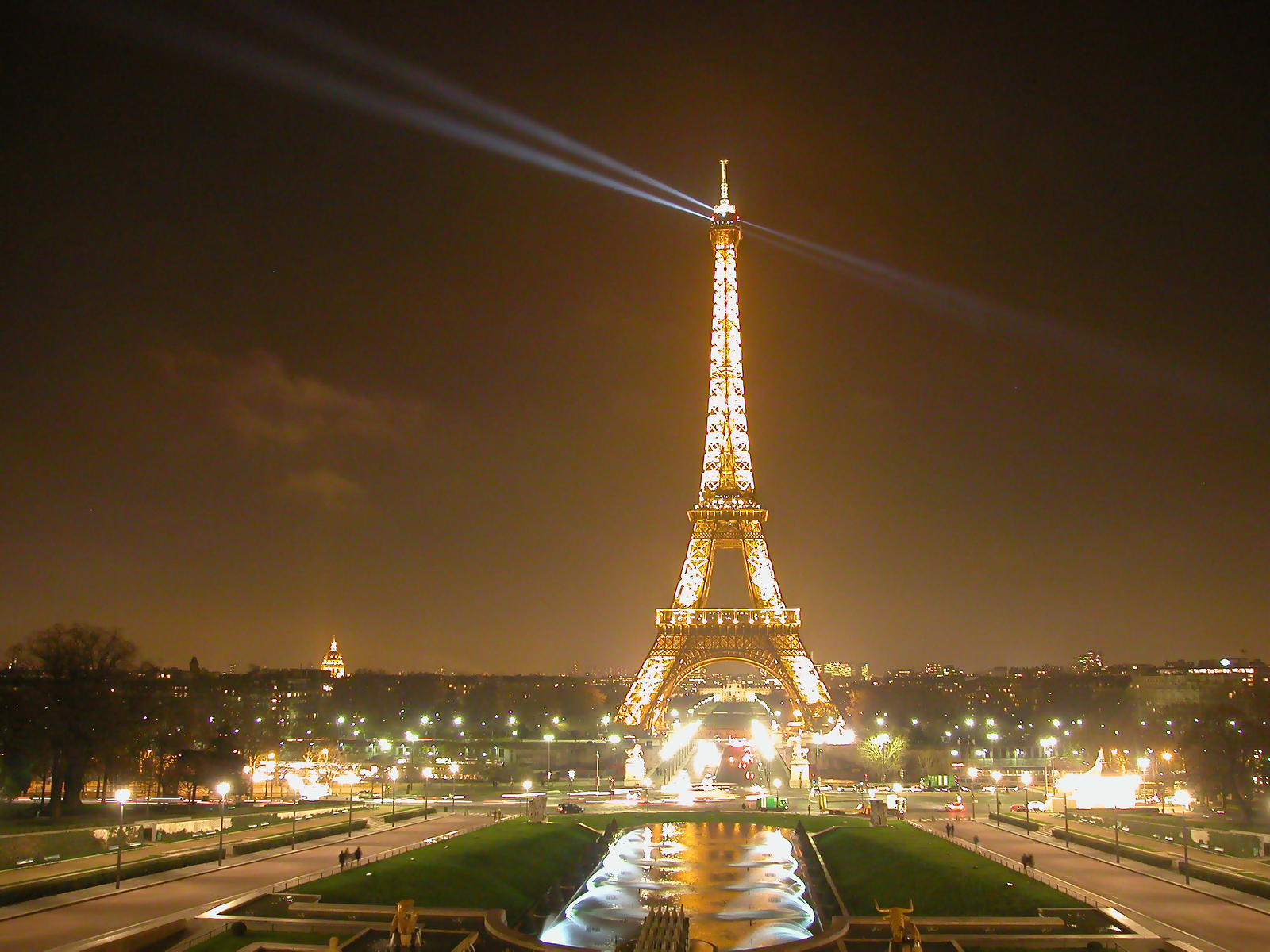
Brilliantly illuminated, the Eiffel Tower dominates the nighttime skyline of Paris.


The tower was designed to be a spectacular architectural centerpiece for the 1889 Exposition Universelle, which was held in Paris from May 6 through October 31, 1889, and coincided with the 100th anniversary of the beginning of the French Revolution. Built over a period of two years, two months, and five days, the tower was a marvel of late-19th-century engineering and construction and was to represent the exposition's theme of "Utopia Achieved." Well in advance of the exposition, the French government held a design competition to select a monument to built on the city's Champ-de-Mars. From the more than 100 designs submitted, Eiffel's design for an open-lattice, wrought-iron tower was selected.


Which Critical Tower Feature Wasn't Ready on Opening Day?


#


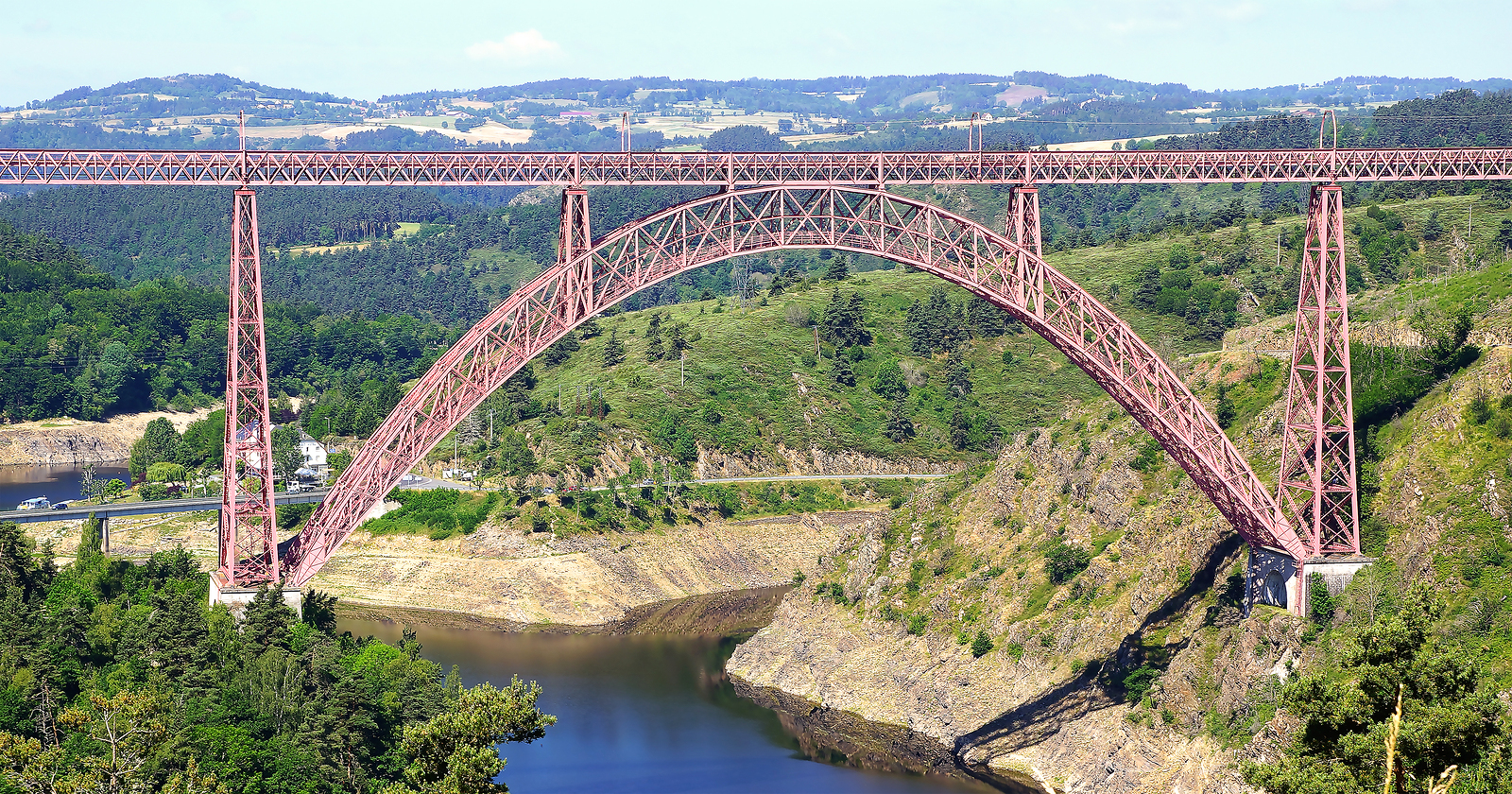
Also designed by Gustave Eiffel, the Garabit Viaduct carries railway traffic across the Truyere River in central France.


Not yet completed for the dedication ceremony of Eiffel's imposing tower were its elevators, designed to quickly carry visitors from ground level to the tower's observation level nearly 1,000 feet above the Paris streets. Because the elevators were unavailable, Eiffel had no other option but to climb the tower's 1,710 steps to plant the French flag at the top of the tower. Accompanying Eiffel on this very strenuous exercise were a handful of reporters as well as some members of the Paris City Council. Down below, less hardy members of the city council, some 200 of the project's workers, and other dignitaries conducted another ceremony, one that was marked by a 21-gun salute.


What Saved the Tower from Scheduled Demolition?As originally conceived, the exposition's soaring centerpiece was designed to remain in place for 20 years, after which it was to be torn down. In the years after its opening, antennas for wireless transmissions were placed atop the tower, eventually bringing its overall height to 1,063 feet and in the end providing a strong argument for preserving the tower. To help spare the tower from demolition, Eiffel actively encouraged scientific experiments that capitalized on the towering structure's height.
What U.S. Skyscraper Succeeded the Tower as the World's Tallest?For just over 40 years, the Eiffel Tower held the title of world's tallest structure. However, in 1930, the opening of the 1,050-foot Chrysler Building in midtown Manhattan succeeded the tower as the world's tallest. In the years since, a number of taller structures have been constructed, dwarfing both the Eiffel Tower and Chrysler Building. The current titleholder, Burj Khalifa, towers 2,722 feet above the streets of Dubai in the United Arab Emirates.
How Much Does It Cost to Paint the Tower?Every seven years, a painting crew refreshes the appearance of the Eiffel Tower with a fresh coat of paint that covers "every crevice, nut, bolt, and beam," according to USAToday.com. In 2009, a 25-man painting crew -- almost all of them foreigners -- slapped on a new coat of "Eiffel Tower brown," the patented paint that for years has accounted for the tower's signature look. The 2009 paint job had a price tag of about 4 million euros ($5.29 million at 2009 exchange rates).


THIS DAY IN HISTORY  Lead Story

31  MARCH  1889

Eiffel Tower opens

In 1889, to honor of the centenary of the French Revolution, the French government planned an international exposition and announced a design competition for a monument to be built on the Champ-de-Mars in central Paris. Out of more than 100 designs submitted, the Centennial Committee chose Eiffel’s plan of an open-lattice wrought-iron tower that would reach almost 1,000 feet above Paris and be the world’s tallest man-made structure. Eiffel, a noted bridge builder, was a master of metal construction and designed the framework of the Statue of Liberty that had recently been erected in New York Harbor.
Eiffel’s tower was greeted with skepticism from critics who argued that it would be structurally unsound, and indignation from others who thought it would be an eyesore in the heart of Paris. Unperturbed, Eiffel completed his great tower under budget in just two years. Only one worker lost his life during construction, which at the time was a remarkably low casualty number for a project of that magnitude. The light, airy structure was by all accounts a technological wonder and within a few decades came to be regarded as an architectural masterpiece.
The Eiffel Tower is 984 feet tall and consists of an iron framework supported on four masonry piers, from which rise four columns that unite to form a single vertical tower. Platforms, each with an observation deck, are at three levels. Elevators ascend the piers on a curve, and Eiffel contracted the Otis Elevator Company of the United States to design the tower’s famous glass-cage elevators.
The elevators were not completed by March 31, 1889, however, so Gustave Eiffel ascended the tower’s stairs with a few hardy companions and raised an enormous French tricolor on the structure’s flagpole. Fireworks were then set off from the second platform. Eiffel and his party descended, and the architect addressed the guests and about 200 workers. In early May, the Paris International Exposition opened, and the tower served as the entrance gateway to the giant fair.
The Eiffel Tower remained the world’s tallest man-made structure until the completion of the Chrysler Building in New York in 1930. Incredibly, the Eiffel Tower was almost demolished when the International Exposition’s 20-year lease on the land expired in 1909, but its value as an antenna for radio transmission saved it. It remains largely unchanged today and is one of the world’s premier tourist attractions.


---{-=@


HICKOK