Monday, October 26, 2015

100 Things – Eat Chicken Wings At The Anchor Bar


100 Things – Eat chicken wings at the Anchor Bar


Visitors come form far and wide to feast on the wings at the Anchor Bar/ The famous originator or the Buffalo chicken wings entertains customers not only with their live weekend music, but also, with a decor which fills nearly every square inch with fun memorabilia. There are about a dozen motorcycles mounted near the ceiling. Customer make purchases in their gift shop. Photo taken, Tuesday, Oct. 13, 2015. (Sharon Cantillon/Buffalo News) 

Visitors come form far and wide to feast on the wings at the Anchor Bar/ The famous originator or the Buffalo chicken wings entertains customers not only with their live weekend music, but also, with a decor which fills nearly every square inch with fun memorabilia.  There are about a dozen motorcycles mounted near the ceiling. Customer make purchases in their gift shop. Photo taken,  Tuesday, Oct. 13, 2015.  (Sharon Cantillon/Buffalo News)


Let your imagination take wing. In other words, picture yourself in the Anchor Bar, at the corner of Main and North streets.
Where in the time-honored tavern would you find the following oddments?
A phone booth.
An autographed picture of former Buffalo Philharmonic Orchestra music director Michael Tilson Thomas.
A scull, and the oars to go with it.
An antique baby carriage.
A Coca-Cola car.
The Statue of Liberty holding up a platter of wings.
A poster hyping World War II savings stamps.
Can’t picture these things? Don’t know where they are? If this scavenger hunt stumps you, there’s a reason.


Thursday, October 22, 2015

Trivia Questions about the Cuban Missile Crisis

Trivia Questions about the Cuban Missile Crisis

In a televised address on October 22, 1962, President John F. Kennedy revealed to the American public that U.S. surveillance aircraft had detected the presence of Soviet missile bases in Cuba, triggering the so-called Cuban missile crisis. 

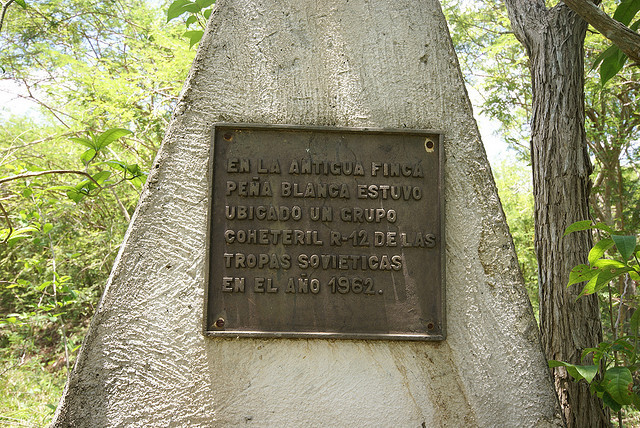
How Did Kennedy Learn of the Cuban Missile Sites?#This monument at San Cristobal in Cuba marks the site of a medium-range ballistic missile base.


Prior to October 14, 1962, there had been a lull of roughly six weeks during which the United States flew no aerial reconnaissance missions using high-flying U-2 jets over Cuba. Responding to anecdotal reports of missile-like objects being moved along Cuban roads under cover of darkness, such reconnaissance flights resumed on October 14. When the photos taken during that flight were reviewed, CIA analysts detected the presence of what they believed were medium-range ballistic missiles capable of hitting multiple targets in the United States. Early on the morning of October 16, 1962, National Security Adviser McGeorge Bundy showed the aerial photographs to Kennedy, thus marking the beginning of the 13-day Cuban missile crisis.

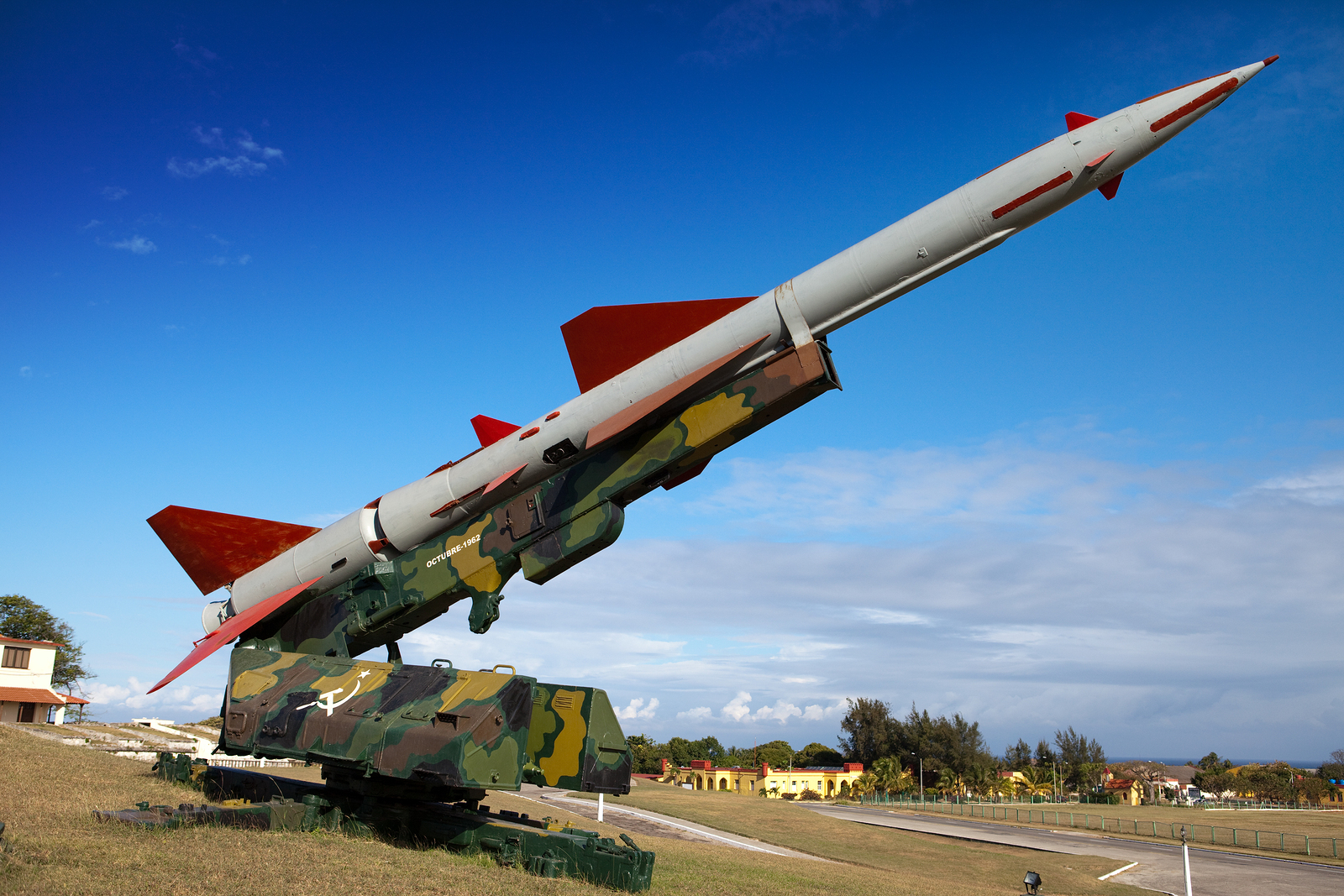
What Response Did the Joint Chiefs of Staff Recommend?#This vintage Soviet missile is on display at Fortress Morro-Cabana in Havana.


In the wake of the missile discovery, Kennedy called together a meeting of the nine members of the National Security Council along with five other key advisers. They mulled a wide array of responses that the United States might take. The options ranged from doing nothing or taking a diplomatic approach on up to an aerial assault on the missile sites coupled with a land-based attack on Cuba. The Joint Chiefs of Staff advocated the most hawkish approach to the dilemma, unanimously recommending a full-scale attack and invasion as the only real solution to the problem.


What Strategy Did JFK Decide to Follow?

Already burned by the disastrous Bay of Pigs invasion in April 1961, Kennedy was extremely wary of following the hawkish recommendations of his top military advisers. He decided to adopt a more measured response to the Cuban missile threat, ordering a naval blockade of Cuba, designed to block and turn back any ship carrying offensive military equipment to the island nation. In his October 22 nationwide address, he announced the blockade and also stated that it would henceforth be U.S. policy "to regard any nuclear missile launched from Cuba against any nation in the Western Hemisphere as an attack by the Soviet Union on the United States. . . ."


How Was the Crisis Finally Resolved?In the immediate wake of Kennedy's announcements, some Soviet ships bound for Cuba appeared to turn around and head back to their home ports. Not so for one Soviet tanker named the Bucharest. Confronted by two U.S. naval vessels on October 25, the tanker continued to steam toward Cuba, and was allowed to do so by naval officers who in the end decided that it was unlikely the tanker contained offensive equipment.

Elsewhere, the situation continued to deteriorate. CIA surveillance indicated that work was continuing on the Cuban missile sites, and on October 27, a U-2 spy plane was shot down over Cuba. Kennedy authorized the U.S. military to prepare for a possible attack on Cuba. In the meantime, Soviet Premier Nikita Khrushchev said his country would remove the missiles from Cuba if the United States would remove its missiles from Turkey and Italy. Just when it seemed that the crisis would end in conflict, the U.S. and Soviet Union struck an accord under which the latter would dismantle its missiles in Cuba in return for a U.S. pledge not to invade the island. Secretly, the United States also pledged to remove its offensive missiles in Turkey and southern Italy, but because this part of the deal remained secret, to the world at large it seemed as if the U.S. had bested the Soviets in striking this accord. 


---{-=@
HICKOK

Wednesday, October 21, 2015

A HAUNTING DREAM~~~~~~The early-morning-hours of 21 Oct 2015


A HAUNTING DREAM~~~~~~The early-morning-hours of 21 Oct 2015

A HAUNTING DREAM
Playing tag

On a squared-off floor
 As a checker-board

Bobby Marzullo is in it
Reflecting on love-letters
Written long-ago
One was lengthy;
Fourteen pages comes to mind
That he reflected on

I woke up; couldn't go back to sleep
Started thinking of
My own love letters
Of long ago

I wrote of those
To two women
In particular

Some of those were lengthy.
Some of those were written,
 And read,
 As Greek tragedies.

I've often wondered if those words,
Certainly not Byron, Keats, or Yeates,
Ever really held Any weight.

Were letters ever even saved??

Is there anything
That is of significance??
Am I simply
Just dust in the wind?

Some how

To some one
Could I be 

A something??


---{-=@ 

HICKOK

Thursday, October 15, 2015

With Syrian airstrikes, Putin casts Russia as everything US is not


With Syrian airstrikes, Putin casts Russia as everything US is not

Trying to woo regional allies, Russian President Vladimir Putin has cast Russia's intervention in Syria as decisive and practical.

That Vladimir Putin is out to save Syrian President Bashar al-Assad seems to be of little doubt.
But increasingly, it appears the Russian leader is intent on making a broader point through his muscular military intervention in the Syrian conflict, and it has to do at least in part with the United States.
In short, he wants to make Russia appear decisive by comparison, giving regional governments a choice in whom they want as a partner, several analysts suggest.
“To America’s partners in the region, starting with Egypt, who are questioning the depth of the US commitment, he is making a stark comparison: Russian reliability vs. American indecision,” says Nikolas Gvosdev, a professor of national security studies and expert in US-Russia relations at the Naval War College in Newport, R.I.

By swooping in to rescue a tottering regime – one ruled by a leader that President Obama has insisted “must go” for more than four years – Mr. Putin is declaring loud and clear that the American style of regime change is not to be trusted. By comparison, Russia seeks to cast itself as the stronger and more reliable of the major powers in the Middle East.
“Putin is saying that Washington is no longer the only go-to capital for getting things done in the world,” Dr. Gvosdev adds.  
Putin has made a particular point of drawing the world’s attention to the failures of American-style regime change – whether it was George W. Bush in Iraq or a “lead from behind” Barack Obama in Libya.
Both he and his foreign minister, Sergei Lavrov, said at the United Nations General Assembly last month that regime change imposed by outside forces leads to nothing but disorder and greater violence, but Russia is intervening in Syria to reestablish order and security.
Putin “spends his time building up himself and his country by pointing out the flaws of the United States,” says John Hulsman, president of John C. Hulsman Enterprises, a global political risk consulting firm in Rothenburg, Germany. “Instead of seeing Putin as a Bond villain the way the US press seems to, we should see him for what he is, a nationalist whose focus is reestablishing and extending Russia’s national honor.”
In that way Putin is a “Gaullist,” Mr. Hulsman says, noting that Charles de Gaulle managed to keep France a power punching above its weight after World War II in part by positioning himself as a critic of America’s global foibles and arrogance.
“Let’s remember that Texas has a higher GDP than Russia,” Hulsman says. “Russia is nowhere near a great power, but by intervening, [Putin] is saying Russia must be reckoned with. And by espousing this idea, appealing to a growing number of listeners, that the region would be better off if unsavory but authoritative leaders were left in place, he is winning for himself a ticket to the big show,” he adds.
Both the US and Russia say they want to weaken and ultimately destroy the self-proclaimed Islamic State, which both powers consider to be a rising terrorist group.
But while the US is supporting moderate rebels who oppose both Islamic State (IS) and Mr. Assad, Russia has been largely leaving IS militants unscathed while targeting anti-Assad rebel forces that it considers to be terrorists.
In the view of some US analysts, Putin’s aim in Syria is to take out the moderate rebels threatening Assad, in effect leaving only two forces –Assad and IS. In that scenario, the US and its Western partners would have little choice but to accept Assad’s survival.
But the Naval War College’s Gvosdev says Putin’s goals might be less grand.
“Even if Putin does only a partial save and manages to keep Assad on his feet in the 20 percent of Syria he now has, that’s probably enough,” Gvosdev says. “He can still say ‘I can get something for my guys, and I never claimed to do more.’”
That, too, will be in pointed contrast to what the US has promised – and not delivered, he adds. The US has “painted itself into a corner” where “anything short of ‘Assad must go’ will be a defeat.”
Much as in Ukraine, Putin’s aims in Syria are limited, and as a result victory can be claimed at a much lower bar, Gvosdev adds.
“Putin has no thought of restoring and transforming Syria – instead a frozen conflict where Assad survives and some manner or order is reestablished at least in part of the country will probably be enough,” he says. “Those larger goals are the ones he sees the US repeatedly going for and then failing at.”


---{-=@
HICKOK


Wednesday, October 14, 2015

It has been a great 135 years at The Buffalo News

It has been a great 135 years at The Buffalo News


on October 11, 2015 - 12:01 AM                                                                                                                                                                                                                                                                                                                                                                                                               One hundred thirty-five years ago today, the first edition of The Buffalo Evening News hit the street. Or more accurately, the floor.
This is the story told by News reporter Ralph Dibble in a 1980 section celebrating the centennial of The News:
“The first edition of The Buffalo Evening News didn’t sell a copy. In fact, it never made it to the press room. Due off the presses at 2 p.m. … the first edition wound up on the floor – a tangled mess of handset type.
“In his unpublished history of The News … Charles H. Armitage, onetime political writer and city editor, described what happened on that first day:
“ ‘Copy had been written and put in type and the type locked in the four little forms that were to convey the issue to a waiting public. And then, on the way to the press room, a decrepit elevator got out of control and the contents of those forms became a mass of pi.’ (Pi is a printer’s term for type that has been jumbled or thrown together at random.)                                                                                                                                                                                                                                                “Mr. Armitage added, ‘What comment was made on that occasion by Edward H. Butler, founder and until his death nearly 34 years later sole proprietor, is not on record.’ ”
The second edition, labeled “4 o’clock p.m.” the same day, was the first published issue of the Evening News. It was a gem. Among the headlines on the front page:
“Sane or Insane?”
“O’Grady’s Dog.”
“A Shameful Outrage.”
“This Is Gossip.”

And my favorite: “Should Be Careful in the Future.” In its entirety, that story read: “The examination of Henry Lutz, charged with passing counterfeit money, was concluded before U.S. Commissioner Scroggs this morning. In consideration of his previous good record, and the fact that he was intoxicated at the time he passed the money, the Commissioner held the case under advisement, and may possibly discharge the prisoner.”
It has been a great 135 years. The News thrived, gradually outselling every competitor. The News innovated, starting the first radio station in Western New York, then the first FM station (the call letters WBEN were an acronym for Buffalo Evening News), then the first television station. In all those years, The News has had only two owners: the founding Butler family and, since 1977, companies run by Omaha investor Warren E. Buffett.
Every Sunday for the next few weeks, on the back page of this section, we will publish a look back at 135 years of The News. Today’s installment: The front page of the very first Buffalo Evening News – the second edition.


Tuesday, October 13, 2015

10 Sports Teams That No Longer Exist

10 Sports Teams That No Longer Exist


Longer Exist

Los Angeles Raiders


Los Angeles Raiders

Los Angeles simply isn't a great sports town. It's quite amazing that the second largest city in America doesn't even have an NFL team. But they used to. One of those teams was the Los Angeles Raiders, owned by the late Al Davis who then moved the team to Oakland where it currently resides. The highlight of the Raiders tenure in Los Angeles was the Super Bowl XI victory over Minnesota.

 ~~~~~~~~~~~~~~~~~~~~~~~~~~~~~~~~~~~~~~~~~~~~~~~~~~~~~~~~~~~~~~~~~~~~~~~~
Los Angeles Rams

Los Angeles Rams

Another former NFL team in Los Angeles was the Rams, who moved to St. Louis in 1995 under then-owner Georgia Frontiere. The Rams never were much of a success in Los Angeles. The fan support wasn't enough to keep them around and the team didn't give the fans much reason to support them. Perhaps the most memorable moment the Los Angeles Rams had in the final years in LA was when quarterback Chris, err Jim Everett attacked Jim Rome on camera on ESPN2.

 ~~~~~~~~~~~~~~~~~~~~~~~~~~~~~~~~~~~~~~~~~~~~~~~~~~~~~~~~~~~~~~~~


Seattle Supersonics

Seattle Supersonics

Despite the success the Supersonics had in the 1990s, it wasn't enough to keep this franchise around for much longer. In 2008, after many protests from loyal fans, the Sonics bolted for Oklahoma City of all places. The city of Seattle refused to build the team a much needed new arena, so that was the last straw.

~~~~~~~~~~~~~~~~~~~~~~~~~~~~~~~~~~~~~~~~~~~~~~~~~~~~~~~~~~~~~~~~~~~


Kansas City Athletics

Kansas City Athletics

Very few baseball fans know that Kansas City actually had a team prior to the formation of the Royals in 1969. The Athletics - now in Oakland - headed west in 1968 when owner Charles O. Finley broke a lease on a new stadium, which is now Kauffman Stadium (named after the owner that brought baseball back to KC after the A's left town).

 ~~~~~~~~~~~~~~~~~~~~~~~~~~~~~~~~~~~~~~~~~~~~~~~~~~~~~~~~~~~~~~~~~


Kansas City Kings

Kansas City Kings

The Kings haven't always played in Sacramento. Up until 1985, this franchise resided in Kansas City. The NBA hasn't returned to Kansas City since. The Kansas City Kings had some great players over the years, such as Nate Archibald and Phil Ford. They just didn't win enough games to keep the fans interested enough.


~~~~~~~~~~~~~~~~~~~~~~~~~~~~~~~~~~~~~~~~~~~~~~~~~~~~~~~~~~~~~~~~~~~~~~~

Houston Oilers

Houston Oilers

What was once a proud NFL city turned into a place not worth having a team anymore. In 1997, the Oilers moved to Memphis and then eventually Nashville two years later after realizing attendance would be higher in central Tennessee. The Oilers never won a Super Bowl, but they did win AFL championships in 1961 and 1962. The most legendary Oiler is, perhaps, quarterback Warren Moon.


 ~~~~~~~~~~~~~~~~~~~~~~~~~~~~~~~~~~~~~~~~~~~~~~~~~~~~~~~~~~~~~~~~~~~~~~~~


Montreal Expos

Montreal Expos

When the Montreal Expos left town for Washington D.C. in 2005, only one Canadian MLB team remained (Toronto Blue Jays). It was only a matter of time before they moved to the States. Fan support was declining and the Expos ownership simply couldn't afford to spend enough to compete. Montreal is a hockey town that had a baseball team. That simply cannot work.

 ~~~~~~~~~~~~~~~~~~~~~~~~~~~~~~~~~~~~~~~~~~~~~~~~~~~~~~~~~~~~~~~~~~~~~~~


Milwaukee Braves

Milwaukee Braves

The Braves formerly played in Milwaukee up until 1966. They also resided in Boston until 1953. The Braves didn't hang around Milwaukee for long because they discovered Atlanta was a more thriving city, which meant higher profits. This franchise didn't have much success in terms of winning in Milwaukee, but they did have one of the game's all-time greats - Hank Aaron.

 ~~~~~~~~~~~~~~~~~~~~~~~~~~~~~~~~~~~~~~~~~~~~~~~~~~~~~~~~~~~~~~~~~~~~~~~~~~~


Washington Senators (Second Franchise)

Washington Senators (Second Franchise)

Can you name the current team formerly known as the Washington Senators? If you guessed the Washington Nationals, you would be incorrect. The Senators are now referred to as the Texas Rangers. In 1972, they left the District for Arlington, Texas and haven't looked back.


 ~~~~~~~~~~~~~~~~~~~~~~~~~~~~~~~~~~~~~~~~~~~~~~~~~~~~~~~~~~~~~~~~~

Washington Senators (First Franchise)

Washington Senators (First Franchise)

The other Washington Senators (before the second franchise) are now the Minnesota Twins. This Senators franchise stuck around Washington D.C. until 1961 when they relocated to the Twin Cities. This Senators franchise wasn't known for winning. They were more known for putrid play and losing.


---{-=@
HICKOK

Do you understand the Syria conflict?

Do you understand the Syria conflict?


 The Syrian conflict began in March 2011 and, despite initial hopes and predictions, has since devolved into civil war. Syria's leader, Bashar al-Assad, has doggedly clung to power. The opposition has splintered into rival groups. International powers have bickered and jockeyed. An end does not appear near. In 1982, Hafez al-Assad ordered the Syrian military to put down a brewing Muslim Brotherhood rebellion there. Some 10,000 to 20,000 people, most of them civilians, were massacred when they stormed the city. The event is now often cited as an example of the lengths to which the Syrian government will go to hold on to power. Hama has become a major opposition center in the current conflict and has been the target of several government assaults. Hafez al-Assad took the Syrian presidency in 1970, in an internal coup. His road to power was a series of such takeovers, beginning with his participation in a 1963 coup that brought his political party, the Baath party, to power. This was followed with a second coup, within the Baath party, that made Hafez al-Assad defense minister. A third coup, again within the party, made him president. Bashar al-Assad came to power in 2000 in an unopposed election, upon his father's death. He had not been his father's first choice for the job – Hafez al-Assad had planned for Basil, his eldest son, to have the job, but Basil was killed in a 1994 car accident. At that point, Bashar was recalled from London, where he had been training as an ophthalmologist, to be groomed as his father's heir apparent. It is often said that Bashar never planned, nor wanted, to participate in political or military affairs. Based on the 1925 Geneva protocol ban on chemical weapon use in war and the 1993 Chemical Weapons Convention's ban on stockpiling and producing the weapons, President Obama established the so-called “red line” in the Syrian civil war to be the use of chemical weapons – meaning that the US would be forced to intervene if the war escalated to this level. By the time the Syrian government did so, in August 2013, more than 100,000 people had already died in the conflict. The Congressional Research Service reports that Syria's chemical weapon stockpiling most likely traces back to its collaboration with Egypt, ahead of the 1973 war with Israel. Syria is a signatory to the 1925 Geneva protocol, which prohibits the use of poisonous gas and biological weapons, but it has not signed the 1993 Chemical Weapons Convention treaty. Russia has repeatedly blocked the US’s efforts to coordinate through the UN various measures on Syria, including, most recently, a UN statement that would have condemned the Syrian government for dropping bombs on civilians. However, in what seemed an attempt to stall a possible US push for military action, should the US government reach consensus on the controversial idea, Russia was instrumental in brokering a UN agreement to rid Syria of its chemical weapons. In part, Russia’s pro-Syrian position can be chalked up to a power play against the US, pushing back against the exercising of US military might abroad. Russia also has significant material interests in its Syrian ally: Syria hosts Russia’s only naval base on the Mediterranean, and Russia pulls in billions from arms sales to Syria, and has even more billions invested in Syrian infrastructure. Russia also has fears that Syria could be become a stewing ground for Islamic radicalism that could seep over to Russia. Hezbollah, a Shiite militant group, has entered the conflict on the side of the government, against the mostly Sunni rebels. Hezbollah has long been an ally of the Syrian and Iranian governments. The Syrian National Coalition has attempted to establish itself as the official Syrian opposition government in exile, with limited success. Many Syrians, particularly among the armed groups, do not see it as the legitimate representative of the anti-government movement. ISIS, the Islamic State of Iraq and the Levant ("Sham" in Arabic), is an Al Qaeda affiliate in operation in Syria. It has emerged as one of, if not the most powerful and extremist Islamist groups in Syria, drawing support away the Free Syrian Army and from moderate, domestic armed groups. Jabhat al-Nusra, or "Victory Front," an Al Qaeda affiliate, was one of the first Islamist groups to begin working in Syria after the uprising began. It quickly established itself as a rogue unit, targeting civilian areas and espousing a vision for a radical Islamic state. It has been designated a terrorist organization by the US, the United Nations, Britain, and others. Its relationship to the Free Syrian Army was at first cooperative, but has since become hostile. It was not among the seven, more moderate Islamist groups, called The Islamic Front, that banded together in fall 2013. The Islamic State in Iraq and the Levant, the Al Qaeda-affiliated group, has said that Jabhat al-Nusra is its representative in Syria. Jabhat al-Nusra, though, has said that it is a separate organization, while reiterating its Al Qaeda allegiance, and recent reports have indicated that the two groups are in fact in conflict with each other. The Islamic Front is a group of seven Islamist rebel groups fighting in Syria that announced their union on Nov. 22, 2013. Islamic Front leaders have said the group was organized as an alternative to the western-backed Syrian National Council. Its end goal is an Islamic state. The two do appear, however, to share a common enemy in the more radical Islamist wings operating in Syria, though the Islamic Front has denied that it was formed as a rebuttal to such extremist groups. Hillary Clinton has stated that the Syrian National Council can "no longer be viewed as the visible leader of the opposition"?


Mrs. Clinton went on to say that the "opposition must include people from inside Syria and others who have a legitimate voice that needs to be heard," dismissing the opposition as out of touch with the on-the-ground rebel movement. The Syrian National Council was that month absorbed into the Syrian National Coalition, which became the Western-backed Syrian opposition. Former Syrian Prime Minister Riyad Hijab is the high-ranking defector from the Syrian regime. Dr. Wael Nader al-Halqi has since replaced him. None of the other named Syrian officials have defected. """""""""
---{-=@
HICKOK